chichime (FCbk12f22r)
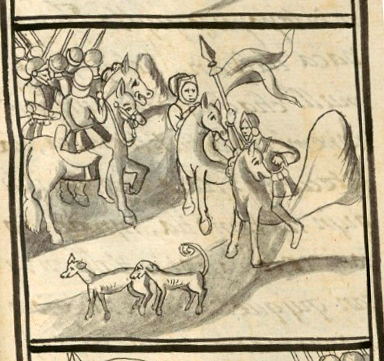
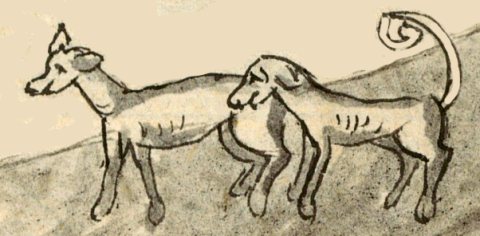
This iconographic example, featuring a black and white sketch of two dogs (chichime, or chichimeh, with the glottal stop, the plural of chichi, dog), is included in this digital collection for the purpose of making comparisons with related hieroglyphs. The term selected for this example comes from the text near the image in the Digital Florentine Codex. There is no gloss, per se. This contextualizing shows how these two dogs accompanied the invading Spanish men, who were wearing armor, carrying lances and a banner, and riding horses. This is set in a vague landscape with shading for three-dimensionality (a learned European artistic style). The Nahuatl text describes the dogs, which caught the attention of the tlacuilo, as creatures that were “sniffing” and “constantly panting.” On other folios in Book 12, the dogs are said to be huge, with large jowls, foam dropping from the mouths, ears folded over, and eyes like burning coals. We do not see protruding tongues here, which is something of a surprise, given how many animals in this digital collection have their tongues sticking out. The curling tail on one of these dogs does tie in with the attention to curling objects often captured in Nahuatl hieroglyphs, including things like swirling water and air.
Stephanie Wood
Incluimos en nuestra colección digital este ejemplo iconográfico, que muestra un bosquejo en blanco y negro de dos perros (chichime o chichimeh con la oclusiva glotal, plural de chichi, perro), para poder compararlo con otros jeroglíficos relacionados. El término seleccionado para este ejemplo proviene del texto cerca de la imagen en el Códice Florentino Digital y no cuenta con glosa en sí. El contexto nos muestra que estos dos cánidos acompañaron a los invasores españoles, los cuales montan a caballo y portan armaduras, lanzas y un estandarte. La escena se ubica en una especie de paisaje con sombreado para denotar la tridimensionalidad (un estilo artístico importado de Europa). El texto náhuatl describe a los cánidos, que captaron la atención del tlacuilo, como creaturas “olisqueantes” y que “jadeaban constantemente”. En otros folios del Libro 12 se lee que los perros eran inmensos, con grandes mandíbulas, espuma en las fauces, orejas dobladas hacia atrás y ojos brillantes como carbones encendidos. En este ejemplo no se aprecian lenguas colgantes, lo cual es hasta cierto punto sorprendente, visto cuántos animales las muestran en nuestra colección digital. La cola enroscada de uno de los canes es un indicio de la atención que se prestaba a los objetos enroscados en los jeroglíficos náhuatl, entre ellos el agua y el aire arremolinados.
Spanish dogs were different from Indigenous dogs of the Americas. They were larger and therefore somewhat frightening at first. As our Online Nahuatl Dictionary shows, besides chichi, there were a number of additional terms for Mexican dogs: itzcuintli, xochcocoyotl, tetlami, and tehuitzotl. Ahuitzotl was also a frightening local dog that lived in the lakes and was believed to be able to pull people down and drown them when they were in the water.
Stephanie Wood
Los perros españoles eran diferentes a los perros nativos de América: eran más grandes y por ello al principio causaban algo de miedo a los indígenas. Como se muestra en nuestro Online Nahuatl Dictionary, además de chichi existían otros términos para nombrar a los perros mexicanos: itzcuintli, xochcocoyotl, tetlami y tehuitzotl. El ahuitzotl era también un espantoso perro nativo que habitaba en los lagos, del cual se creía que era capaz de apoderarse de los nadadores y ahogarlos en las profundidades.

chichime
chichimeh
Stephanie Wood
1577
Jeff Haskett-Wood
perro, perros, caballo, caballos, lanza, lanzas, escudos, bandera, cola rizada, colas
chichi, dog, https://nahuatl.wired-humanities.org/content/chichi
el perro
Stephanie Wood
Available at Digital Florentine Codex/Códice Florentino Digital, edited by Kim N. Richter and Alicia Maria Houtrouw, "Book 12: Conquest of Mexico", fol. 22r, Getty Research Institute, 2023. https://florentinecodex.getty.edu/en/book/12/folio/22r/images/0 Accessed 7 February 2026.
Images of the digitized Florentine Codex are made available under the following Creative Commons license: CC BY-NC-ND (Attribution-NonCommercial-NoDerivs 4.0 International). For print-publication quality photos, please contact the Biblioteca Medicea Laurenziana ([email protected]). The Library of Congress has also published this manuscript, using the images of the World Digital Library copy. “The Library of Congress is unaware of any copyright or other restrictions in the World Digital Library Collection. Absent any such restrictions, these materials are free to use and reuse.”