cintli (FCbk11f246r)
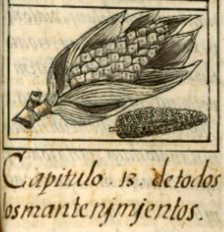
This iconographic example, featuring a black and white sketch of a dried ear of maize (cintli or centli), is included in this digital collection for the purpose of making comparisons with related hieroglyphs. The term selected for this example comes from the text near the image in the Digital Florentine Codex. There is no gloss, per se. This example shows two ears of corn, one still with its husk partly opened, and the other without any husk. The husk has lines of texture. The kernels of the corn cob with the husk have pointed tips. The kernels on the smaller cob, on the lower right, are more rounded. The sketch includes shading, revealing European artistic influence. Another scene keyworded “cintli,” but called “xinachtli” (seed) in the text, appears on folio 249 recto. Additional examples of “cintli” on folio 249v and 250r.
Stephanie Wood
The text refers both to “cintli” (given some preference) and “centli,” as though the latter were a variation. Glosses on hieroglyphs for the Codex Mendoza (c. 1541) prefer cin- and cintli. But glosses on hieroglyphs in the Matrícula de Huexotzinco seem to show a preference for cen- and centli. With more examples, regional variations might become clearer.
Stephanie Wood
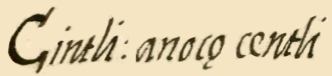
Cintli: anoço centli
cintli: anozo centli
Stephanie Wood
1577
Jeff Haskett-Wood
mazorcas, curada, seca, granos de maíz, comida
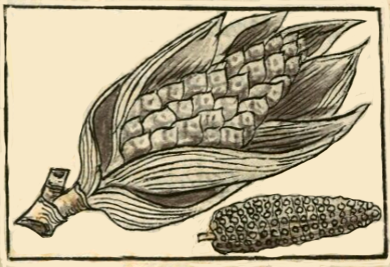
cin(tli) or cen(tli), a dried ear of maize, https://nahuatl.wired-humanities.org/content/cintli and https://nahuatl.wired-humanities.org/content/centli
la mazorca de maíz
Stephanie Wood
Available at Digital Florentine Codex/Códice Florentino Digital, edited by Kim N. Richter and Alicia Maria Houtrouw, "Book 11: Earthly Things", fol. 246r, Getty Research Institute, 2023. https://florentinecodex.getty.edu/en/book/11/folio/246r/images/0 Accessed 16 November 2025.
Images of the digitized Florentine Codex are made available under the following Creative Commons license: CC BY-NC-ND (Attribution-NonCommercial-NoDerivs 4.0 International). For print-publication quality photos, please contact the Biblioteca Medicea Laurenziana ([email protected]). The Library of Congress has also published this manuscript, using the images of the World Digital Library copy. “The Library of Congress is unaware of any copyright or other restrictions in the World Digital Library Collection. Absent any such restrictions, these materials are free to use and reuse.”