colotl (FCbk11f92r)
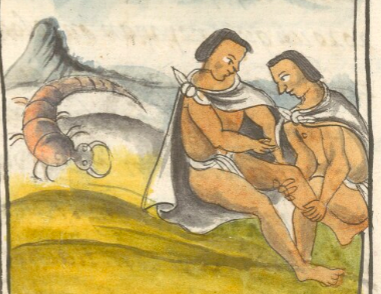
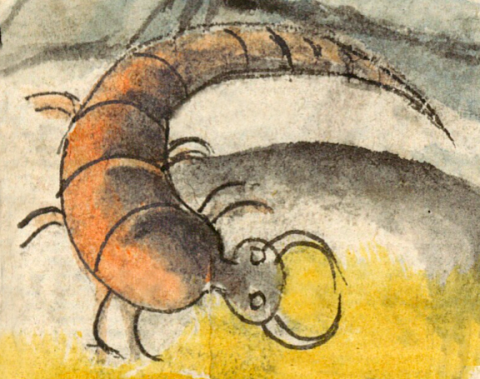
This iconographic example, supposedly featuring a scorpion (colotl), is included in this digital collection for the purpose of making comparisons with related hieroglyphs. The term selected for this example comes from the text on the page previous to the image (f. 92r) in the Digital Florentine Codex. There is no gloss, per se. Scorpions usually have a tail curving at the back with a stinger on the end. Scorpions also have two claw-like pincers at the front. Perhaps the artist was not really familiar with scorpions. This creature looks more like those called petlazolcoatl (centipedes) on the previous page. The contextualizing image shows two men wearing three-dimensional cloaks and loincloths. One is holding the leg of the other, who has been stung by a scorpion. The incident is set in a landscape, another indication of European artistic influence, and yet there is a peak in the distance, something that would have captured the Nahua artist’s attention.
Stephanie Wood
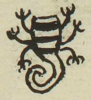
Two scorpions do appear already in this digital collection, but neither one is anatomically correct. Interestingly, one is a personal name.
Stephanie Wood
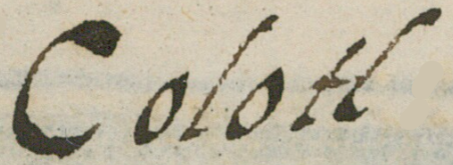
Colotl
colotl
Stephanie Wood
1577
Jeff Haskett-Wood
alacranes, escorpión, escorpiones, arácnido, arácnidos
colo(tl), scorpion, or a hook, https://nahuatl.wired-humanities.org/content/colotl
el alacrán
Stephanie Wood
Available at Digital Florentine Codex/Códice Florentino Digital, edited by Kim N. Richter and Alicia Maria Houtrouw, "Book 11: Earthly Things", fol. 92r, Getty Research Institute, 2023. https://florentinecodex.getty.edu/en/book/11/folio/92r/images/0 Accessed 16 October 2025.
Images of the digitized Florentine Codex are made available under the following Creative Commons license: CC BY-NC-ND (Attribution-NonCommercial-NoDerivs 4.0 International). For print-publication quality photos, please contact the Biblioteca Medicea Laurenziana ([email protected]). The Library of Congress has also published this manuscript, using the images of the World Digital Library copy. “The Library of Congress is unaware of any copyright or other restrictions in the World Digital Library Collection. Absent any such restrictions, these materials are free to use and reuse.”