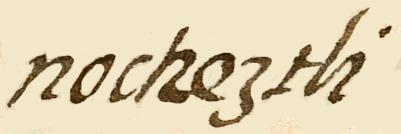
nocheztli (FCbk11f216v)
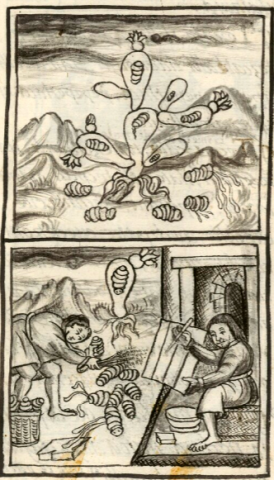
This iconographic example, featuring the production of cochineal, a red carmine dye (nocheztli), is included in this digital collection for the purpose of making comparisons with related hieroglyphs. The term selected for this example comes from the text near the image in the Digital Florentine Codex. There is no gloss, per se. This example shows two scenes. The upper one shows how the parasitic scale insect grows on the branches (pencas, in Spanish) of the prickly pear (nopalli in Nahuatl, nopal in Spanish) cactus. The insects look like worms, as that was how they were seen, even if they are not worms, caterpillars, or cocoons. Some of them at on the ground below the cactus. Note how the roots are visible above the ground. The plant is placed in a landscape setting, which is an artistic style learned from the colonizers. The lower scene shows a Nahua man at work scraping the insects off the cactus with a broom made from a branch. Another Nahua man is preparing to paint or write on what appears to be paper (or possibly cloth) put together from four vertical strips. Anderson and Dibble translate the man’s activity as painting. The tool for painting or writing is interesting, in that it is not a European paintbrush, but more like the instruments used for writing in this hieroglyphic collection. Behind this tlacuilo (writer/painter) is a building. The clothing of the men and the building all have shading that creates a three-dimensionality, an artistic element that has been taught to the artist here by the colonizers. This is true, too, of the landscape setting.
Stephanie Wood
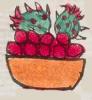
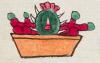
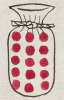
See the earlier images of nocheztli from the Codex Mendoza, below.
Stephanie Wood
nocheztli
Stephanie Wood
1577
Jeff Haskett-Wood
carmín, insecto, parásito, nopal, nopales, nopalli, prickly pear cactus, cacti, cactos, gusano, gusanos, capullo, capullos, oruga, orugas
nochez(tli), cochineal red (carmine) dye, https://nahuatl.wired-humanities.org/content/nocheztli
la grana cochinilla
Stephanie Wood
Available at Digital Florentine Codex/Códice Florentino Digital, edited by Kim N. Richter and Alicia Maria Houtrouw, "Book 11: Earthly Things", fol. 216v, Getty Research Institute, 2023. https://florentinecodex.getty.edu/en/book/11/folio/216v/images/0 Accessed 16 November 2025
Images of the digitized Florentine Codex are made available under the following Creative Commons license: CC BY-NC-ND (Attribution-NonCommercial-NoDerivs 4.0 International). For print-publication quality photos, please contact the Biblioteca Medicea Laurenziana ([email protected]). The Library of Congress has also published this manuscript, using the images of the World Digital Library copy. “The Library of Congress is unaware of any copyright or other restrictions in the World Digital Library Collection. Absent any such restrictions, these materials are free to use and reuse.”