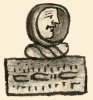
tlalli (FCbk11f215v)
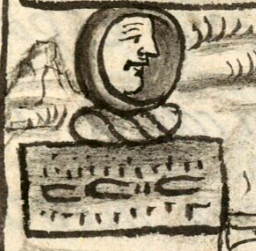
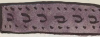
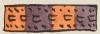
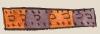
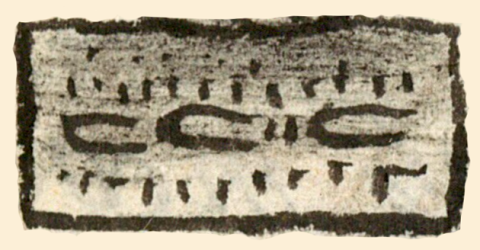
This element from a compound, featuring the landscape (tlalli) where tin (amochitl) ore will be located, is included in this digital collection for the purpose of making comparisons with related hieroglyphs and their elements. The term selected for this example comes from the text near the image in the Digital Florentine Codex. There is no gloss, per se. This example shows a horizontal rectangle with a row of three backwards C-shapes. Above these shapes is a row of dots, and below them, another row of dots. The dots may represent seeds, and the C-shapes may indicate cultivation, such as where the digging stick (huictli) had penetrated.
Stephanie Wood
These details of the tlalli are classic ones that date back at least to c. 1541 (the Codex Mendoza) and had enduring value. The early ones, however, might face the C-shapes in different directions; they sometimes also divided the strip of land into parcels of alternating colors.
Stephanie Wood
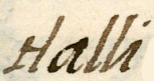
tlalli
Stephanie Wood
1577
Jeff Haskett-Wood
lands, parcels, tracts, tierras
tlal(li), land, https://nahuatl.wired-humanities.org/content/tlalli
la tierra
Stephanie Wood
Available at Digital Florentine Codex/Códice Florentino Digital, edited by Kim N. Richter and Alicia Maria Houtrouw, "Book 11: Earthly Things", fol. 215v, Getty Research Institute, 2023. https://florentinecodex.getty.edu/en/book/11/folio/215v/images/0 Accessed 16 November 2025.
Images of the digitized Florentine Codex are made available under the following Creative Commons license: CC BY-NC-ND (Attribution-NonCommercial-NoDerivs 4.0 International). For print-publication quality photos, please contact the Biblioteca Medicea Laurenziana ([email protected]). The Library of Congress has also published this manuscript, using the images of the World Digital Library copy. “The Library of Congress is unaware of any copyright or other restrictions in the World Digital Library Collection. Absent any such restrictions, these materials are free to use and reuse.”