zacatl (FCbk12f26v)
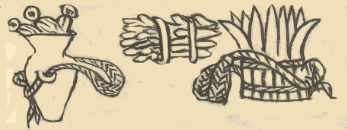
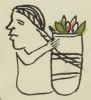
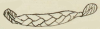
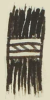
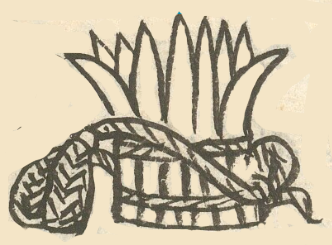
This simplex glyph is a sketch of a bundle of grasses (zacatl) to feed horses. It is included in this digital collection for the purpose of making comparisons with related hieroglyphs. There is no gloss or obvious text for this particular item. This example shows a bundle of grasses standing on end, wrapped with a double horizontal rope that is attached to a tumpline (mecapalli) to help transport the bundle.
Stephanie Wood
This glyph is one of a small group of items that the Spaniards began demanding from the Mexica once they had seized Motecuhzoma in his palace. Hay for horses became a regular tribute item as attested in the record for zacatl in our Online Nahuatl Dictionary.
Stephanie Wood
1577
Jeff Haskett-Wood
paja, hierbas, pasto, alimento para caballos
zaca(tl), grasses, hay, straw, https://nahuatl.wired-humanities.org/content/zacatl
el zacate
Stephanie Wood
Available at Digital Florentine Codex/Códice Florentino Digital, edited by Kim N. Richter and Alicia Maria Houtrouw, "Book 12: Conquest of Mexico", fol. 26v, Getty Research Institute, 2023. https://florentinecodex.getty.edu/en/book/12/folio/26v/images/0 Accessed 7 February 2026.
Images of the digitized Florentine Codex are made available under the following Creative Commons license: CC BY-NC-ND (Attribution-NonCommercial-NoDerivs 4.0 International). For print-publication quality photos, please contact the Biblioteca Medicea Laurenziana ([email protected]). The Library of Congress has also published this manuscript, using the images of the World Digital Library copy. “The Library of Congress is unaware of any copyright or other restrictions in the World Digital Library Collection. Absent any such restrictions, these materials are free to use and reuse.”