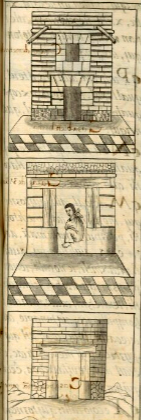
zazan ye calli (FCbk11f242r)
This iconographic example, featuring a black and white sketch of a common house (zazan ye calli), is included in this digital collection for the purpose of making comparisons with related hieroglyphs. The term selected for this example comes from the text near the image in the Digital Florentine Codex. There is no gloss, per se. This example shows a frontal view of a house with a wood-framed entrance and a facade of adobe bricks and some stone mosaics at ground level.
Stephanie Wood
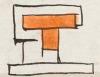
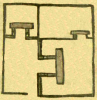
In following pages an “icnocalli” (humble house) appears, and that is a more humble house than this one, as is the “macehualcalli” (the commoner’s house). The mosaic base would suggest a semi-important level of decoration. The common calli in hieroglyphs, typically shown in a profile view in the 1540s and sometimes in a frontal view by 1560, does support the wood-framed entrance, but the construction materials are not usually highlighted. A frontal view tended to be used for houses or buildings with a specific purpose that needed highlighting, such as Iztacalco (“at the lime kiln building”). A calli drawn or painting in a frontal view seems to have grown with European artistic influence.
Stephanie Wood
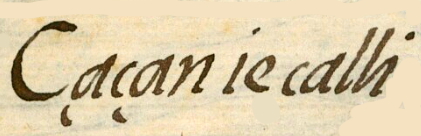
Çaçan ie calli
zazan ye calli
Stephanie Wood
1577
Jeff Haskett-Wood
casas, arquitectura, adobe, piedra, mosaico, madera
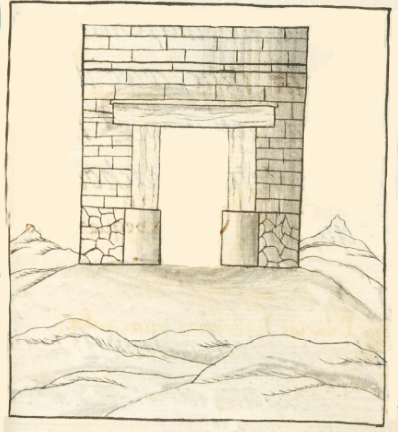
zazan ye calli, a common house, https://nahuatl.wired-humanities.org/content/zazan-ye-calli
la casa común o normal
Stephanie Wood
Available at Digital Florentine Codex/Códice Florentino Digital, edited by Kim N. Richter and Alicia Maria Houtrouw, "Book 11: Earthly Things", fol. 242r, Getty Research Institute, 2023. https://florentinecodex.getty.edu/en/book/11/folio/242r/images/0 Accessed 16 November 2025.
Images of the digitized Florentine Codex are made available under the following Creative Commons license: CC BY-NC-ND (Attribution-NonCommercial-NoDerivs 4.0 International). For print-publication quality photos, please contact the Biblioteca Medicea Laurenziana ([email protected]). The Library of Congress has also published this manuscript, using the images of the World Digital Library copy. “The Library of Congress is unaware of any copyright or other restrictions in the World Digital Library Collection. Absent any such restrictions, these materials are free to use and reuse.”