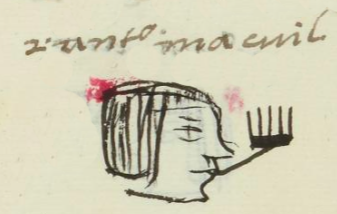
Macuil (MH570v)
This black-line drawing of the simplex glyph/notation for the personal name Macuil ("Five," attested here as a man's name) shows a group of five (macuilli) vertical black lines connected at the bottom with a much thicker black line.
Stephanie Wood
Macuil is probably all that remains of a calendrical name that involved the number five in combination with any one of twenty day signs, such as xochitl, or the like. This would be a name given to the man as a child, depending upon the day in the 260-day divinatory calendar (tonalpohualli) that coincided with his birth. he man as a child, depending upon the day in the calendar that coincided with his birth. By the time of this manuscript, 1560, evolution was taking place in the use of the divinatory calendar, whereby either the number was dropping away, there was some self-censoring of the use of calendrical names, or people were responding to pressures from the colonial clergy requires further investigation. Macuil is an especially prevalent example of this change. On the other hand, it may have a different meaning associated with lasciviousness. There were five divine forces called Ahuiteteo ("Cheerful Deities") known for "voluptuousness and lust," and each one of the five had a calendrical name that started with the number five (macuilli), a "symbol of excesses" (according to signage at the Templo Mayor).
Stephanie Wood
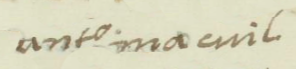
anto macuil
Antonio Macuil
Stephanie Wood
1560
numbers, números, five, cinco, tonalpohualli, calendarios, días, fechas, dates, nombres de hombres, men's names
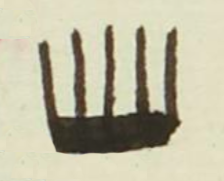
macuil(li), five, https://nahuatl.wired-humanities.org/content/macuilli
Matrícula de Huexotzinco, folio 570v, World Digital Library, https://www.loc.gov/resource/gdcwdl.wdl_15282/?sp=220&st=image.
This manuscript is hosted by the Library of Congress and the World Digital Library; used here with the Creative Commons, “Attribution-NonCommercial-ShareAlike 3.0 License” (CC-BY-NC-SAq 3.0).