teotl (FCbk11f209v)
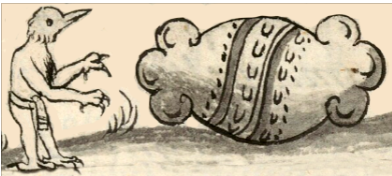
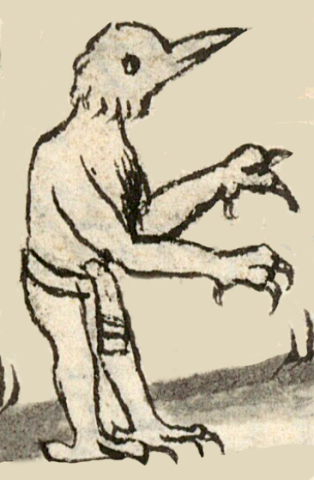
This hieroglyphic element features a (transformed) divine force (teotl). It is included in this digital collection for the purpose of making comparisons with related hieroglyphs. The term selected for this example comes from the text on the page prior to the image in the Digital Florentine Codex. There is no gloss, per se. In actuality this example shows a visual of a tlacatecolotl, but it is put into this setting as a representation of teotl (divine force, sacred force, deity). This teotl is an element of the compound glyph for teotetl (black amber, also called jet), which is featured in the contextualizing image. The placement of the teotl and the stone (tetl) in a landscape also shows European artistic influence. The figure representing teotl here stands on two feet, like a person (tlacatl), and wears a loincloth like a man. But his head is that of a bird, probably a horned owl (tecolotl). In place of a person’s arms and legs, hands and feet, this creature has four bird’s legs with clawed feet.
Stephanie Wood
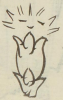
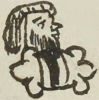
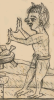
As a result of colonial religious indoctrination, the tlacatecolotl (human-owl), which had been some kind of formidable force, became a demonic force, devil-like with its horns. Teotl, in the earliest Nahuatl hieroglyphs, on the other hand, tends to be a sign characterized as a half of a sun (tonatiuh or tonalli) and then a sun with a human face and sunrays. The transformation of glyphs of teotl, which the Catholic clergy came to understand as the equivalent of “Dios” (God), seem to parallel the gradual Christianization of the Nahua tlacuilos. After becoming European-style suns, glyphs of teotl gradually can be seen as human or Christ-like figures, and now here, in the final third of the sixteenth century, teo- has become demonic. See some examples below.
Stephanie Wood
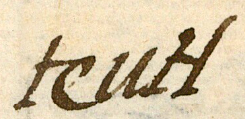
teutl
teotl
Stephanie Wood
1577
Jeff Haskett-Wood
demonios, deidades, fuerzas divinas, fuerzas sagradas, deities, buhos, buho-humano, tecolote, tecolotes, evangelización, sol, soles, caras humanas, rayos
teo(tl), a sacred or divine force, deity, https://nahuatl.wired-humanities.org/content/teotl
una fuerza divina, una deidad; o, aquí, el tlacatecolotl
Stephanie Wood
Available at Digital Florentine Codex/Códice Florentino Digital, edited by Kim N. Richter and Alicia Maria Houtrouw, "Book 11: Earthly Things", fol. 209v, Getty Research Institute, 2023. https://florentinecodex.getty.edu/en/book/11/folio/209v/images/0 Accessed 16 November 2025.
Images of the digitized Florentine Codex are made available under the following Creative Commons license: CC BY-NC-ND (Attribution-NonCommercial-NoDerivs 4.0 International). For print-publication quality photos, please contact the Biblioteca Medicea Laurenziana ([email protected]). The Library of Congress has also published this manuscript, using the images of the World Digital Library copy. “The Library of Congress is unaware of any copyright or other restrictions in the World Digital Library Collection. Absent any such restrictions, these materials are free to use and reuse.”