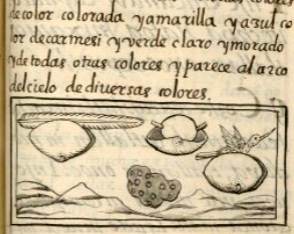
atzcalli (FCbk11f212r)
This iconographic example, featuring three clams or clam shells (atzcalli), is included in this digital collection for the purpose of making comparisons with related hieroglyphs. The term selected for this example comes from the text near the image in the Digital Florentine Codex. There is no gloss, per se. This example shows black-line drawings of three variations on the clam (quetzalatzcalli, chalchiuhatzcalli, and huitzitzilatzcalli). These shells are drawn like hieroglyphs. For instance the quetzalatzcalli shows a horizontal quetzal feather over a clam shell. The chalchiuhatzcalli has a chalchihuitl (precious greenstone) on a string sitting inside a clam shell. And the huitzitzilatzcalli has a hummingbird (huitzitzilin), in profile, facing right, partly inside an almost closed clam shell. The shells have some shading, which shows European artistic influences. The text describing the shells speaks with awe about the colors on the insides of the shells, which seems to be the characteristic of greatest interest and the distinguishing feature between the three variations on the clam featured here. There is one stone or another type of shell in this image of the three types of clamshells. Perhaps it is meant to represent the ayopalli, which is mentioned briefly in the text as a squash-blossom color that turns brown.
Stephanie Wood
All three clam shells have names that connect to the special coloring of other known items in the cultural life of the Nahuas, such as quetzal feathers (green), greenstones (green again), and hummingbirds (shimmery metallic greens and blues). So, these items are like semantic elements of compound hieroglyphs, not literally part of the clams. This is the first example of a clam to enter the digital collection (December 2025), but the collection does include many different types of shells. The most prevalent by far is the small turbinate shell that splashes off of streams of water.
Stephanie Wood
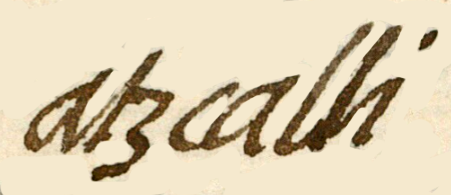
atzcalli
Stephanie Wood
1577
Jeff Haskett-Wood
concha, conchas, almeja, casa de molusco, moluscos, marisco, mariscos
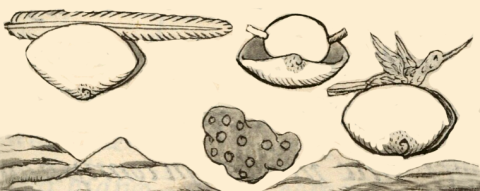
atzcal(li), a clam or clam shell, https://nahuatl.wired-humanities.org/content/atzcalli
las almejas
Stephanie Wood
Available at Digital Florentine Codex/Códice Florentino Digital, edited by Kim N. Richter and Alicia Maria Houtrouw, "Book 11: Earthly Things", fol. 212r, Getty Research Institute, 2023. https://florentinecodex.getty.edu/en/book/11/folio/212r/images/0 Accessed 16 November 2025.
Images of the digitized Florentine Codex are made available under the following Creative Commons license: CC BY-NC-ND (Attribution-NonCommercial-NoDerivs 4.0 International). For print-publication quality photos, please contact the Biblioteca Medicea Laurenziana ([email protected]). The Library of Congress has also published this manuscript, using the images of the World Digital Library copy. “The Library of Congress is unaware of any copyright or other restrictions in the World Digital Library Collection. Absent any such restrictions, these materials are free to use and reuse.”