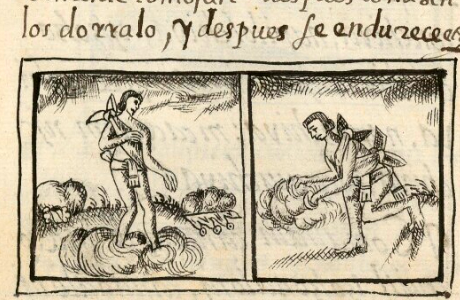
zoquitl (FCbk11f231v)
This iconographic example, featuring a black-line sketch in a black rectangle of a man standing in mud (zoquitl), is included in this digital collection for the purpose of making comparisons with related hieroglyphs. The term selected for this example comes from the text near the image in the Digital Florentine Codex. There is no gloss, per se. This example shows not only a Nahua man with his feet buried in swirling mud, but the landscape scene also includes two hieroglyphs, a stone (tetl) on the left and water (atl) on the right. The text explains that clay “is water and earth mixed together” (in Anderson and Dibble’s translation of the Nahuatl). The contextualizing image also shows a man working clay with his hands. Both men wear a cloak tied over a shoulder and pulled back so that they can work. They also wear loincloths. The shading on the bodies and on the cloth show European artistic influences. These drawings also include dark sky bands at the top of the rectangles–mostly made of hatch marks, but with some other indeterminate shapes.
Stephanie Wood
The presence of hieroglyphs in this scene reveals a survival of knowledge of glyphic writing–at least for some signs. Zoquitl (mud) overlaps with clay (contlalli) , in that both were used for making earthenware. See below for a zoquitl hieroglyphic element in a place name, Zoquitzinco.
Stephanie Wood
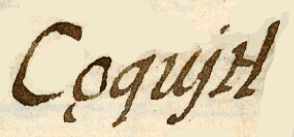
Çoquitl
zoquitl
Stephanie Wood
1577
Jeff Haskett-Wood
barro, arcilla
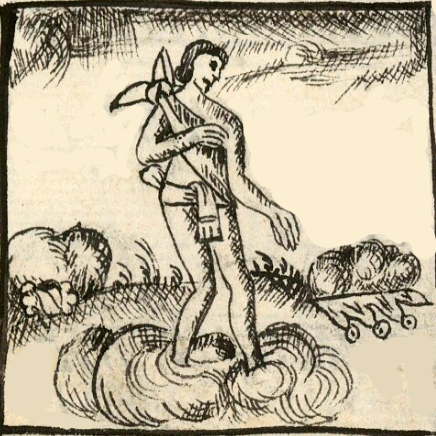
zoqui(tl), mud, https://nahuatl.wired-humanities.org/content/zoquitl
el lodo
Stephanie Wood
Available at Digital Florentine Codex/Códice Florentino Digital, edited by Kim N. Richter and Alicia Maria Houtrouw, "Book 11: Earthly Things", fol. 231v, Getty Research Institute, 2023. https://florentinecodex.getty.edu/en/book/11/folio/231v/images/0 Accessed 16 November 2025.
Images of the digitized Florentine Codex are made available under the following Creative Commons license: CC BY-NC-ND (Attribution-NonCommercial-NoDerivs 4.0 International). For print-publication quality photos, please contact the Biblioteca Medicea Laurenziana ([email protected]). The Library of Congress has also published this manuscript, using the images of the World Digital Library copy. “The Library of Congress is unaware of any copyright or other restrictions in the World Digital Library Collection. Absent any such restrictions, these materials are free to use and reuse.”