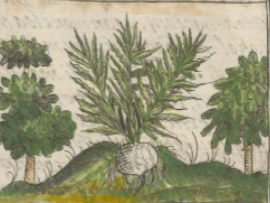
nahui ihuipil (FCbk11f140v)
This iconographic example, featuring a ginger plant (nahui ihuipil), is included in this digital collection for the purpose of making comparisons with related hieroglyphs. The term selected for this example comes from the keywording near the image in the Digital Florentine Codex. There is no gloss, per se. This example shows a plant with three branches covered with many slender leaves. These leaves are reminiscent of the iztac quilitl, according to the Nahuatl text on this same page. At the bottom is a white bulbous root (visible above the landscape). It is shaded, giving it three-dimensionality, which shows European artistic influence. The text also mentions that the root was prepared with chilli, maize, and ashes for use as a remedy for a cough. The root was also ground and applied to inflamed eyes with a cotton ball.
Stephanie Wood
The text relating to this plant does not provide a clue as to why the name refers to “its four huipiles” (if that translation is correct). It looks like a white radish, more than a ginger root, but it is apparently in the ginger family. See our Online Nahuatl Dictionary for more information about the plant. Roots of plants and trees are often made visible in Nahuatl hieroglyphs. In the case of plants, roots often have a medicinal value. The most popular root in this digital collection is the cimatl.
Stephanie Wood

Navi ivipil
nahui ihuipil
Stephanie Wood
1577
Jeff Haskett-Wood
plantas, raíces, raíz, remedios, tos, ojos inflamados, medicina, medicinas, salud, número, números
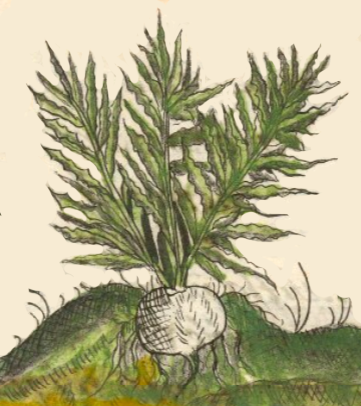
nahui ihuipil, a plant in the ginger family, https://nahuatl.wired-humanities.org/content/nahui-ihuipil
una planta en la familia del jengibre
Stephanie Wood
Available at Digital Florentine Codex/Códice Florentino Digital, edited by Kim N. Richter and Alicia Maria Houtrouw, "Book 11: Earthly Things", fol. 140v, Getty Research Institute, 2023. https://florentinecodex.getty.edu/en/book/11/folio/140v/images/0 Accessed 16 November 2025.
Images of the digitized Florentine Codex are made available under the following Creative Commons license: CC BY-NC-ND (Attribution-NonCommercial-NoDerivs 4.0 International). For print-publication quality photos, please contact the Biblioteca Medicea Laurenziana ([email protected]). The Library of Congress has also published this manuscript, using the images of the World Digital Library copy. “The Library of Congress is unaware of any copyright or other restrictions in the World Digital Library Collection. Absent any such restrictions, these materials are free to use and reuse.”