metztica (Osu15v)
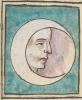
This painted black-line drawing of the simplex Nahuatl hieroglyph for moon (metztli) actually refers to the monthly (metztica) tribute requirement that the local Nahuas had to provide. The Spanish-language text explains this. This moon is a crescent that is open to the viewer’s right. A little anthropomorphic face is settled into the curve. The coloring of the moon is graduated, going from white on the left to pink on the right.
Stephanie Wood
The face in the moon represents European cultural influence, considering that the Europeans saw a human face in the surface patterns of the moon, whereas the Nahuas saw a rabbit shape. In this digital collection, the European moon dominates; it would seem to have been something learned early on. Also, given that the rabbit had an association with alcoholic beverages and drunkenness, the ecclesiastics probably worked diligently to stop people from thinking of the rabbit in the moon.
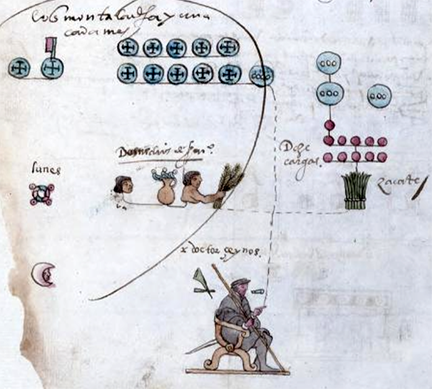
The contextualizing image shows the various tribute requirements that had to be delivered monthly. The purpose of this manuscript was to protest the onerous demands from the Spanish colonial authorities.
Stephanie Wood
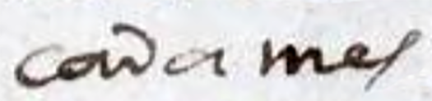
cada mes
Stephanie Wood
1551–1565
Jeff Haskett-Wood
mensual, mensualmente, luna, lunas, tiempo, tributo, tributos

metz(tli), the moon, https://nahuatl.wired-humanities.org/content/metztli
metztica, monthly, https://nahuatl.wired-humanities.org/content/metztica
centotochtin, 400 rabbits, a reference to the alcoholic beverage pulque, https://nahuatl.wired-humanities.org/content/centzontotochtin
cada mes
Stephanie Wood
Library of Congress Online Catalog and the World Digital Library, Osuna Codex, or Painting of the Governor, Mayors, and Rulers of Mexico, https://www.loc.gov/resource/gdcwdl.wdl_07324/. The original is located in the Biblioteca Nacional de España.
"The Library of Congress is unaware of any copyright or other restrictions in the World Digital Library Collection. Absent any such restrictions, these materials are free to use and reuse." But please cite the Biblioteca Nacional de España and this Visual Lexicon of Aztec Hieroglyphs if you use any of these images here or refer to the content on this page, providing the URL.