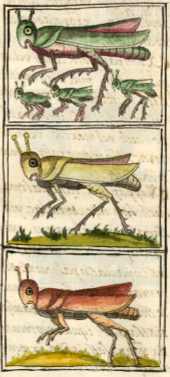
chapolin (FCbk11f101v)
This iconographic example, featuring a grasshopper (chapolin), is included in this digital collection for the purpose of making comparisons with related hieroglyphs. The term selected for this example comes from the text near the image in the Digital Florentine Codex. There is no gloss, per se. This example shows a profile view of a grasshopper, facing the viewer’s left. The level of detail is impressive. This chapolin has a segmented body with green wings and a red underside. Its mouth is open, and what appear to be teeth are showing. The positioning of the legs gives the impression of movement. Some shading provides three-dimensionality, something suggestive of European artistic influence. The contextualizing image shows how grasshoppers come in a variety of colors. These insects are edible, and they are still a part of the diet of Mexicans today.
Stephanie Wood
The place name, Chapoltepec, accounts for a number of compound glyphs in this database. Further, the apocopated form, Chapol, was a popular name for men in Huexotzinco in 1560, so this collection has several examples of grasshoppers for that reason, too. See below.
Stephanie Wood
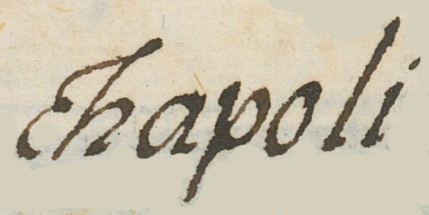
chapoli
chapolin
Stephanie Wood
1577
Jeff Haskett-Wood
chapulines, saltamontes, grasshoppers, insecto, insectos, saltar
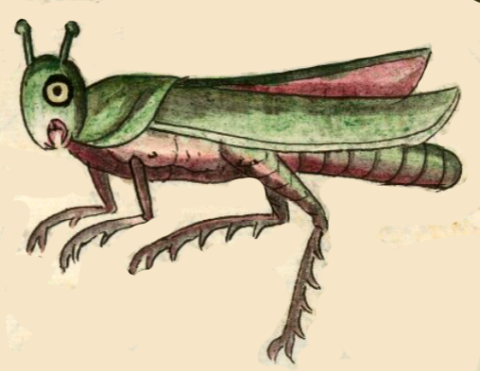
chapol(in), grasshopper or locust, https://nahuatl.wired-humanities.org/content/chapolin
el chapulín, el saltamonte
Stephanie Wood
Available at Digital Florentine Codex/Códice Florentino Digital, edited by Kim N. Richter and Alicia Maria Houtrouw, "Book 11: Earthly Things", fol. 101v, Getty Research Institute, 2023. https://florentinecodex.getty.edu/en/book/11/folio/101v/images/0 Accessed 16 October 2025.
Images of the digitized Florentine Codex are made available under the following Creative Commons license: CC BY-NC-ND (Attribution-NonCommercial-NoDerivs 4.0 International). For print-publication quality photos, please contact the Biblioteca Medicea Laurenziana ([email protected]). The Library of Congress has also published this manuscript, using the images of the World Digital Library copy. “The Library of Congress is unaware of any copyright or other restrictions in the World Digital Library Collection. Absent any such restrictions, these materials are free to use and reuse.”