Ecatl (Verg25v)
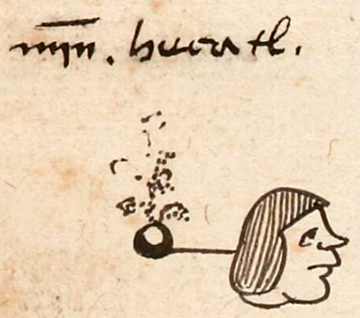
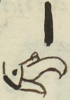
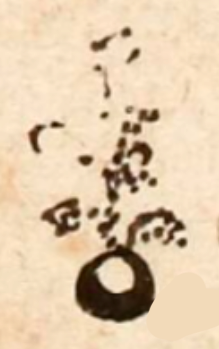
This compound Nahuatl hieroglyph is a black-line drawing of the personal name Ecatl (probably for Ehecatl), attested here as a man’s name. It shows an unidentified swirling substance (probably dust blowing in the wind) and, at the base of that, a black bean (etl). The bean provides the phonetic indication that this name begins with E-. Ehecatl is a day name in the 260-day religious divinatory calendar, the tonalpohualli. Typically, a day name would have a companion number between 1 and 13. After colonization, these numbers become somewhat rare, whether through a fading tradition or an effort to disguise the continued use of the calendar in the face of clerical opposition. However, if this manuscript is as early as many believe, it would probably not be likely that this was a case of forgetting the iconography.
Stephanie Wood
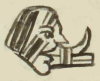
The name Ecatl is considerably more numerous than Ehecatl. This one starts with the silent H. Other Ecatl hieroglyphs in the Codex Vergara (e.g., 22r , 23v, 31v) also include the swirling substance and bean; none of them shows a figure with a wind blowing device on its face. So, these elements may be disguised, if that was the intention, to look like something other than the sacred or divine force of the wind. Serious events in 1539 may have made Nahua tlacuilos more cautious when writing and painting about aspects of their faith. See Patricia Lopes Don for information about the Inquisition case against don Carlos Ometochtli, a Chichimecatecuhtli (or Chichimecateuctli) executed in late 1539, in Bonfires of Culture, 2010. Bradley Benton (The Lords of Tetzcoco, 2017, 46) also writes that the case “demonstrates that blatant disregard for Christianity had serious consequences.”
Stephanie Wood
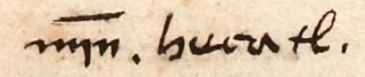
mīn. hecatl.
Martín Ecatl (or Ehecatl)
Stephanie Wood
1539
Jeff Haskett-Wood
aire, aries, movimiento de aire, nombres de deidades, nombres de fuerzas divinas, religión indígena, fonetismo, nombres de hombres, men’s names
eca(tl), breath, https://nahuatl.wired-humanities.org/content/ecatl
eheca(tl), wind, and the divine force of wind, https://nahuatl.wired-humanities.org/content/ehecatl
e(tl), bean, black bean, https://nahuatl.wired-humanities.org/content/etl
Aliento o Viento (nombre de una deidad)
Stephanie Wood
Available at Codex Vergara, folio 25v, https://gallica.bnf.fr/ark:/12148/btv1b84528032/f58.item.zoom, accessed 22 February 2026. The Vergara is associated with Tepetlaoztoc, in the larger region of Tetzcoco, c. 1539–1543.
The non-commercial reuse of images from the Bibliothèque nationale de France is free as long as the user is in compliance with the legislation in force and provides the citation: “Source gallica.bnf.fr / Bibliothèque nationale de France” or “Source gallica.bnf.fr / BnF.” We would also appreciate a citation to the Visual Lexicon of Aztec Hieroglyphs, https://aztecglyphs.wired-humanities.org/.