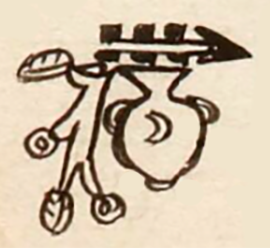
Itzcoatl (Verg38v)
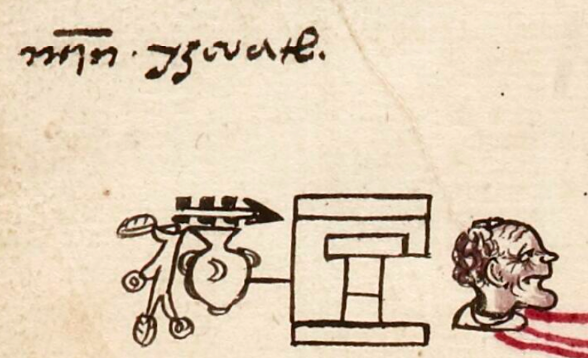
This compound Nahuatl hieroglyph is a black-line drawing of the personal name Itzcoatl (a famous ruler’s name, taken here by a male tribute payer). The three elements of the compound include an arrow with obsidian blades (itztli) of the type (rectangular) that one will find embedded in the macuahuitl war club. Below the arrow is a pottery jug (comitl) and, to the left of that, a stream of water (atl) with four little sprays, each one ending in alternating turbinate shells and droplets or beads. These latter elements provide the phonetic syllables -co- and -atl- that combine to form -coatl (snake, serpent) in a way that disguises that the name has something to do with the reptile that was so prominent in the Nahua religion and whose lasting significance upset the colonial clergy. Serious events in 1539 may have made Nahua tlacuilos more cautious when writing and painting about aspects of their faith. See Patricia Lopes Don for information about the Inquisition case against don Carlos Ometochtli, a Chichimecatecuhtli (or Chichimecateuctli) executed in late 1539, in Bonfires of Culture, 2010. Bradley Benton (The Lords of Tetzcoco, 2017, 46) also writes that the case “demonstrates that blatant disregard for Christianity had serious consequences.”
Stephanie Wood
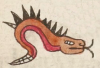
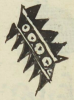
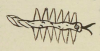
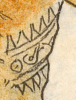
Compound hieroglyphs for Itzcoatl are very common in this digital collection, which also includes the variants Itzcoa and Itzcoatzin. Another one, on folio 40r, is much like this one. Differing from this one, the vast majority of the other examples do include serpents with triangular obsidian blades protruding from their backs. Two are more like designs that include obsidian points and small circles (water symbols?). These echo a couple of glyphs in the collection that relate to tlacuilolli in its meaning as a design. See Tetlacuilol from the Matrícula de Huexotzinco and a tlacuilolli example from the Florentine Codex (below).
Stephanie Wood
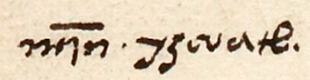
mīn. izcoatl.
Martín Itzcoatl
Stephanie Wood
1539
Jeff Haskett-Wood
serpientes, víbora, víboras, culebra, culebras, obsidiana, barro, agua, fonetismo, nombres de hombres, men’s names, earthenware, ceramic, ceramics, cerámicas, jug, pot, olla, jarra, jarro, vessel, vessels, vasija de cerámica, cántaro, cántaros, xoctli, xoctepi, huicolli, atlacuihuani, tecomitl, tecontontli, apilolli
Itzcoatl, fourteenth ruler of the Mexica, https://nahuatl.wired-humanities.org/content/Itzcoatl
itz(tli), obsidian blade, https://nahuatl.wired-humanities.org/content/itztli
coa(tl), a snake or serpent, https://nahuatl.wired-humanities.org/content/coatl
posiblemente, “Serpiente de Obsidiana”
Stephanie Wood
Available at Codex Vergara, 38v, https://gallica.bnf.fr/ark:/12148/btv1b84528032/f84.item.zoom, accessed 1 March 2026 The Vergara is associated with Tepetlaoztoc, in the larger region of Tetzcoco, c. 1539–1543. “Source gallica.bnf.fr / BnF.” We would also appreciate a citation to the Visual Lexicon of Aztec Hieroglyphs, https://aztecglyphs.wired-humanities.org/.
Image Rights: The non-commercial reuse of images from the Bibliothèque nationale de France is free as long as the user is in compliance with the legislation in force and provides the citation: “Source gallica.bnf.fr / Bibliothèque nationale de France” or “Source gallica.bnf.fr / BnF.” We would also appreciate a citation to the Visual Lexicon of Aztec Hieroglyphs, https://aztecglyphs.wired-humanities.org/