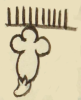
Matlactli (MH553v)
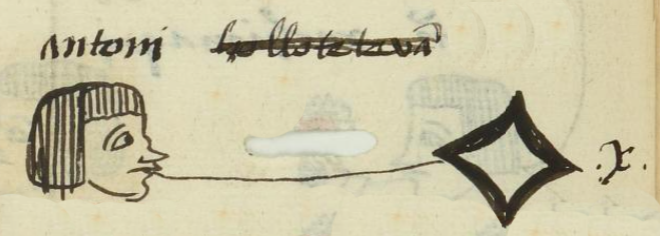
This black-line drawing of the simplex glyph for the personal name Matlactli (or Mahtlactli, with the glottal stop), meaning “Ten,” is attested here as a man’s name. It shows a wide diamond shaped quatrefoil with a thick black line and no colorant in the center. There was a gloss for this name, but it was crossed out, and the Roman numeral X was added to the right of the glyph.
Stephanie Wood
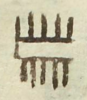
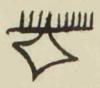
In many codices this symbol is a notation, and perhaps here it is, too. It is possible that this was once a calendrical name and the day sign (from the 260-day divinatory calendar, the tonalpohualli) has disappeared or been suppressed over time. The tonalpohualli, being used for "prognostication and divination, had no parallel and contravened Christian dogma so its use was disavowed and prohibited." [See Rubén G. Mendoza, Ritual Human Sacrifice in Mesoamerica (2024), 439.] Nevertheless, calendrics were an important part of Nahuas' religious views of the cosmos, and this practice survived a long time under colonialism, even if in modified form.
Stephanie Wood
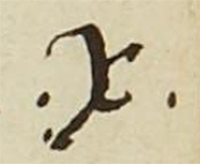
.x.
X
Stephanie Wood
1560
José Aguayo-Barragán and Stephanie Wood
numbers, números, ten, diez, diamantes, mahtlactli, nombres de hombres
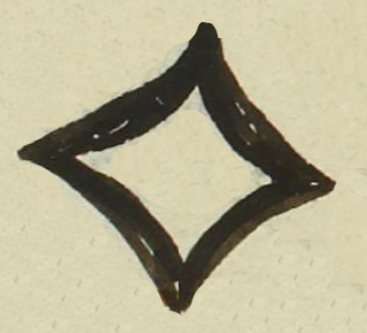
matlac(tli), ten, https://nahuatl.wired-humanities.org/content/matlactli
Diez
Stephanie Wood
Matrícula de Huexotzinco, folio 533v, World Digital Library. https://www.loc.gov/resource/gdcwdl.wdl_15282/?sp=186&st=image
This manuscript is hosted by the Library of Congress and the World Digital Library; used here with the Creative Commons, “Attribution-NonCommercial-ShareAlike 3.0 License” (CC-BY-NC-SAq 3.0).