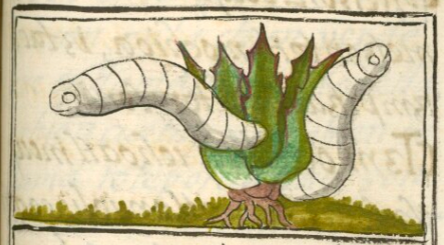
meoculin (FCbk11f104r)
This iconographic example, featuring a worm (meocuilin) associated with the maguey plant, is included in this digital collection for the purpose of making comparisons with related hieroglyphs. The term selected for this example comes from the text near the image in the Digital Florentine Codex. There is no gloss, per se. This example shows a profile view of a curving white worm with a segmented body, facing the viewer’s left. It has what appears to be one visible white eye and a small mouth. The contextualizing image shows two worms, closely connected to a maguey plant. The landscape setting could suggest European artistic influence, but the maguey plant (metl) could also provide the phonetic and semantic addition of the me- to the start of the name of this worm. The underside of the worm is shaded with a gray color, giving it a three-dimensionality, another European artistic tradition.
Stephanie Wood
These “worms” (moth larva) that are found in maguey plants are apparently the ones that are sometimes put into the bottles of mezcal and tequila in modern times. They are edible, and the red ones (also shown on 104r) are especially prized and put into tacos.This digital collection includes a number of worms, but none yet (November 2025) that have the name meocuilin. See a few examples of worms below.
Stephanie Wood
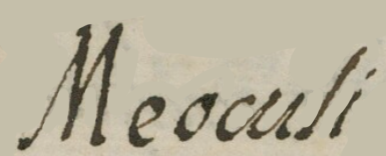
Meoculi
meocuilin
Stephanie Wood
1577
Jeff Haskett-Wood
gusanos, magueyes
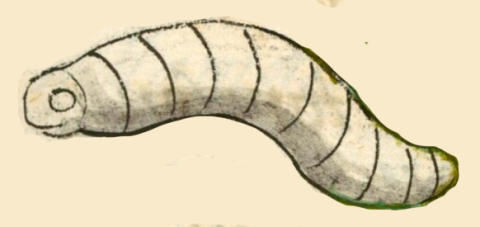
meocuil(in), a maguey worm, https://nahuatl.wired-humanities.org/content/meocuilin
el gusano del maguey
Stephanie Wood
Available at Digital Florentine Codex/Códice Florentino Digital, edited by Kim N. Richter and Alicia Maria Houtrouw, "Book 11: Earthly Things", fol. 104r, Getty Research Institute, 2023. https://florentinecodex.getty.edu/en/book/11/folio/104r/images/0 Accessed 16 October 2025.
Images of the digitized Florentine Codex are made available under the following Creative Commons license: CC BY-NC-ND (Attribution-NonCommercial-NoDerivs 4.0 International). For print-publication quality photos, please contact the Biblioteca Medicea Laurenziana ([email protected]). The Library of Congress has also published this manuscript, using the images of the World Digital Library copy. “The Library of Congress is unaware of any copyright or other restrictions in the World Digital Library Collection. Absent any such restrictions, these materials are free to use and reuse.”