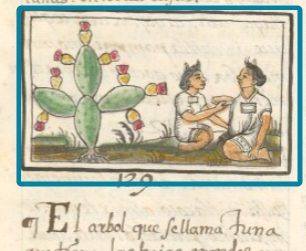
nopalli (FCbk11f170v)
This iconographic example, featuring the nopal cactus (nopalli, or nohpalli, with the glottal stop), is included in this digital collection for the purpose of making comparisons with related hieroglyphs. The term selected for this example comes from the text near the image in the Digital Florentine Codex. There is no gloss, per se. This example shows a nopal cactus with a central leader and two side branches. Each one has three yellow fruits (nochtli) with red blossoms. One nochtli on the left edge is cut off by the black box that was drawn around this painting. The branches have faint spots, which seem to indicate the locations of thorns. The contextualizing image shows two women sitting on their legs on the ground. They both have the neaxtlahualli hairstyle, and they wear the huipilli, the type with the rectangle at the base of the v-neck. The woman on the left is a healer; she is offering the woman on the right some medicine that derives from the nopalli (according to the text on the same page). Surprisingly, perhaps, the Spanish-language text on this page refers to the cactus as the “el árbol que se llama tuna,” the “tuna tree” (using the Spanish translation for nochtli).
Stephanie Wood
This digital collection has a couple of hieroglyphs featuring nopal cacti, but the fruit (nochtli) of this cactus is more prevalent, partly because it is an element in the place name of the capital city (Tenochtitlan). Interestingly, Nopal is in this collection as a personal name, as well as an element in a place name (e.g., Nopalapan).
Stephanie Wood
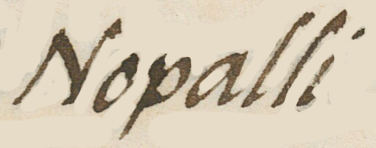
Nopalli
nopalli
Stephanie Wood
1577
Jeff Haskett-Wood
nopales, cactos, plantas, tuna, tunas, frutas, medicina, medicinas, mujeres
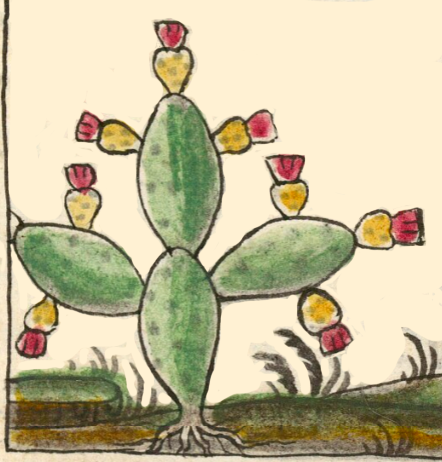
nopal(li), the nopal cactus, https://nahuatl.wired-humanities.org/content/nopalli
el nopal
Stephanie Wood
Available at Digital Florentine Codex/Códice Florentino Digital, edited by Kim N. Richter and Alicia Maria Houtrouw, "Book 11: Earthly Things", fol. 170v, Getty Research Institute, 2023. https://florentinecodex.getty.edu/en/book/11/folio/170v/images/0 Accessed 16 November 2025.
Images of the digitized Florentine Codex are made available under the following Creative Commons license: CC BY-NC-ND (Attribution-NonCommercial-NoDerivs 4.0 International). For print-publication quality photos, please contact the Biblioteca Medicea Laurenziana ([email protected]). The Library of Congress has also published this manuscript, using the images of the World Digital Library copy. “The Library of Congress is unaware of any copyright or other restrictions in the World Digital Library Collection. Absent any such restrictions, these materials are free to use and reuse.”