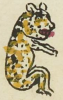
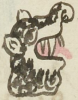
Ocelotl (MH483v)
This black-line drawing of the simplex glyph for the personal name Ocelotl (here, attested as a man’s name) shows a jaguar (ocelotl) head in profile, looking toward the viewer's right. Its coat is spotted.
Stephanie Wood
Ocelotl does not equate to ocelot in English, but rather means jaguar. The ocelotl was a day name in the 260-day divinatory calendar called the tonalpohualli. When babies were given this name, it would originally have had a companion number from 1 to 13. By 1560, when this manuscript was made, these numbers were either fading our of use, or they were suppressed to reduce a recognition of the continued influece of the pre-contact calendar and its religious associations. Jaguars and eagles were also the mascots for Aztec warriors.
Stephanie Wood

ocelotl
Stephanie Wood
1560
Xitlali Torres
jaguars, jaguares, days, días, fechas, dates, calendars, calendarios, nombres de hombres
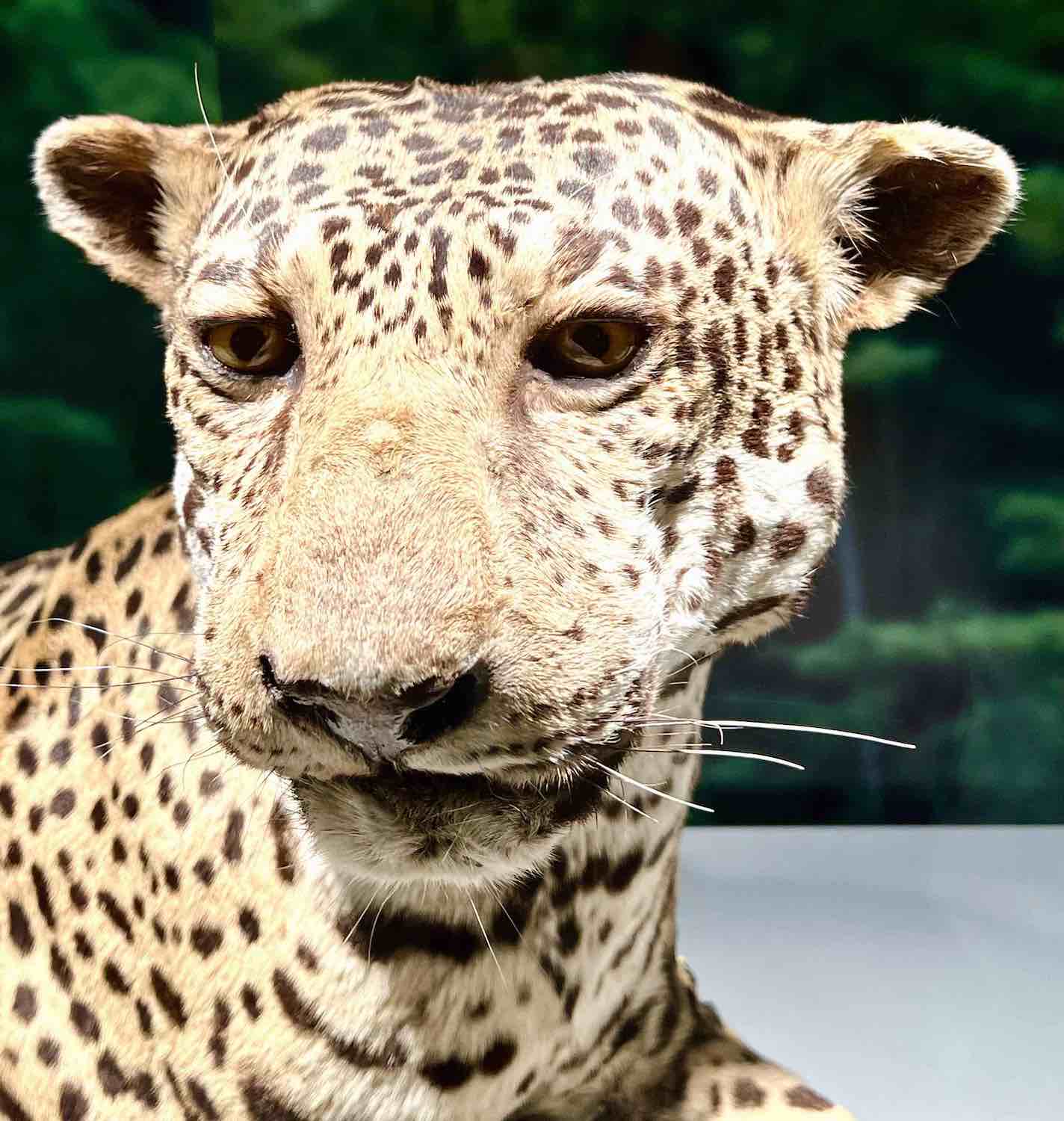
This view of an ocelotl (jaguar, or Panthera onca) is found in the museum of the Templo Mayor. The signage relates how this animal was one of the most highly revered across Mesoamerica. It was perceived to have a connection to “water, fertility, caves, and the night.” As a divine force it was called “Tepeyollotli” (or Tepeyollohtli), “Mountain Heart,” which was “one of the manifestations of Tezcatlipoca, personifying the generative powers of the earth. It was also associated with warfare and gave its name to one of the principal Mexica military orders: ‘jaguar warriors’ or ocelotl. Its spotted skin was highly valued and tribute lists record that the province of Xoconochco (Soconusco) gave forty jaguar pelts in tribute twice a year to Tenochtitlan. Despite their great importance, only two complete jaguar specimens have been found in the Templo Mayor offerings.” Photograph by Stephanie Wood, Museo del Templo Mayor, Mexico City, 15 February 2023.
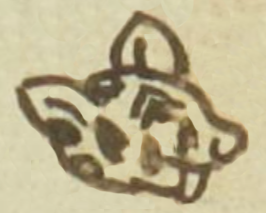
ocelo(tl), a jaguar, https://nahuatl.wired-humanities.org/content/ocelotl
el jaguar
Stephanie Wood
Matrícula de Huexotzinco, folio 483v, World Digital Library,
This manuscript is hosted by the Library of Congress and the World Digital Library; used here with the Creative Commons, “Attribution-NonCommercial-ShareAlike 3.0 License” (CC-BY-NC-SAq 3.0).