tlaco tomin (Osu17v)
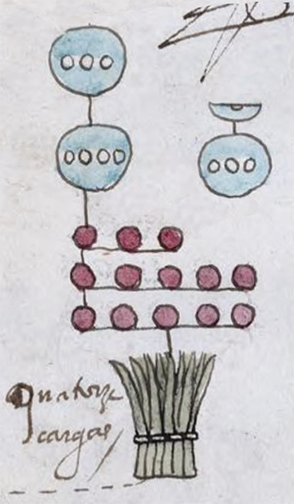
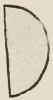
This painted simplex Nahuatl hieroglyph shows a half (tlaco) of a coin (tomin, a loanword from Spanish), which represents 1/16 of a peso. It is the lower half of a blue coin (likely made of silver) that would have had one small white circle in the center (but only half of this small circle shows). The context shows other blue coins. The label we are giving this glyph has been deduced from the context, as there is no gloss. This half-tomin is attached to a coin with three dots, referring to three tomines. The context is showing how many tomines worth of “yerva” (hierba, also called mazatlacualli on other pages of this manuscript, which is literally, “deer food,” but means fodder for horses) that this community had to provide to the Spanish overlord, Doctor Puga, a judge of the Audiencia (high court), in a day. The Spanish gloss refers to fourteen loads of this fodder, and the notation shows how many tomines these loads were valued: 13 (the red dots) times (indicated by the line connecting) 7 (4 + 3) tomines, then another 3.5 tomines on the right. The total would be 94.5 tomines (which would be 11 pesos and 6.5 tomines if converted to a total in pesos). A Spanish-language text on folio 14 verso mentions that a load of fodder had a value of a half real (or half a tomin). Humble Nahuas were more accustomed to dealing in tomines in their daily economies, but the elite Nahuas also knew pesos already in the sixteenth century. The larger context of the manuscript page (not shown here) shows the number of pesos this tribute added up to in a month. The pesos have crosses on them, which distinguishes them from tomines.
Stephanie Wood
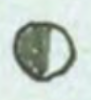
The Codex Osuna has many pages showing monetary values for the various loads of fodder, and so the half-tomin recurs; see, for example, folio 23v. Another half-tomin much like this one appears in a manuscript detail published by Marc Thouvenot in TLACHIA. Another one also appears in the Codex Chavero. That one is drawn in a different way, as a circle that is light on one half and dark on the other. The gloss for that one indicates that it is a “medio” (often written as melio in Nahuatl). The term tlaco (half) enters into this digital collection elsewhere in the form of half a tortilla and half of a piece of agricultural land.
Stephanie Wood
Stephanie Wood
1551–1565
Jeff Haskett-Wood
moneda, mitad, reales

tom(in), a coin or money, https://nahuatl.wired-humanities.org/content/tomin
tlaco, half, https://nahuatl.wired-humanities.org/content/tlaco
medio real
Stephanie Wood
Library of Congress Online Catalog and the World Digital Library, Osuna Codex, or Painting of the Governor, Mayors, and Rulers of Mexico, https://www.loc.gov/resource/gdcwdl.wdl_07324/. The original is located in the Biblioteca Nacional de España.
"The Library of Congress is unaware of any copyright or other restrictions in the World Digital Library Collection. Absent any such restrictions, these materials are free to use and reuse." But please cite the Biblioteca Nacional de España and this Visual Lexicon of Aztec Hieroglyphs if you use any of these images here or refer to the content on this page, providing the URL.