tlaolli (FCbk10f132r)
tlaolli (FCbk10f132r)
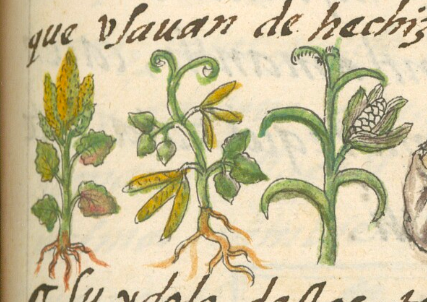
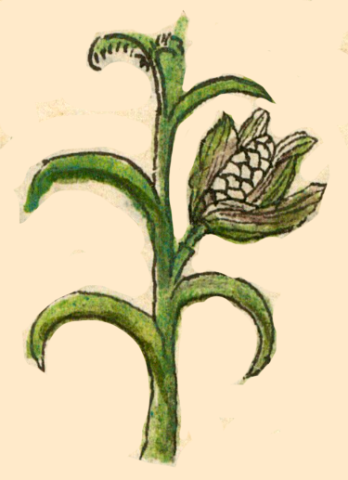
This iconographic example, featuring a maize plant (tlaolli), is included in this digital collection for the purpose of making comparisons with related hieroglyphs. The term selected for this example comes from the text on the page preceding this image in the Digital Florentine Codex. There is no gloss, per se. This example shows a frontal view of a standing corn plant with four leaf blades and a fully developed ear or cob of corn. The husk has been peeled back to show the cob and its kernels. At the top of the plant are two curling tassels that are the plant’s flowers.
Stephanie Wood
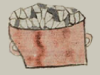
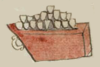
The term tlaolli as expressed in Nahuatl hieroglyphs can appear as a container full of kernels. Thus, when the term tlaolli is used in the text in this particular example, it may be referring to the visible kernels in the painting more than the whole plant. In the Codex Mendoza, on two occasions, the Spanish-language gloss “maíz” appears when kernels are the focus. When the corn cob is the focus, even when the kernels are showing, terms like centli (also spelled cintli), xilotl, elotl, and cacamatl are more typically indicated. Finally, the stalk of maize should be ohuatl or toctli.
Stephanie Wood
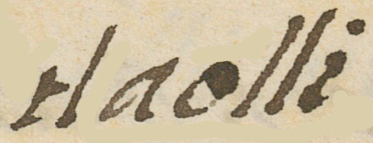
tlaolli
Stephanie Wood
1577
Jeff Haskett-Wood
mazorca, mazorcas, elote, elotes, planta, plantas, comida
tlaol(li), a maize plant, https://nahuatl.wired-humanities.org/content/tlaolli
el maíz
Stephanie Wood
Available at Digital Florentine Codex/Códice Florentino Digital, edited by Kim N. Richter and Alicia Maria Houtrouw, "Book 10: The People", fol. 39v, Getty Research Institute, 2023. https://florentinecodex.getty.edu/en/book/10/folio/39v/images/0 Accessed 10 September 2025
Images of the digitized Florentine Codex are made available under the following Creative Commons license: CC BY-NC-ND (Attribution-NonCommercial-NoDerivs 4.0 International). For print-publication quality photos, please contact the Biblioteca Medicea Laurenziana ([email protected]). The Library of Congress has also published this manuscript, using the images of the World Digital Library copy. “The Library of Congress is unaware of any copyright or other restrictions in the World Digital Library Collection. Absent any such restrictions, these materials are free to use and reuse.”