tlatla (FCbk12f2r)
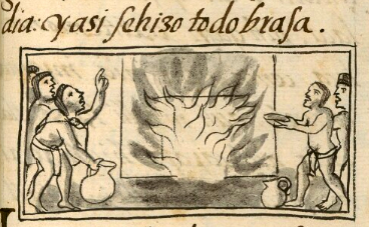
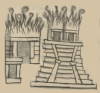
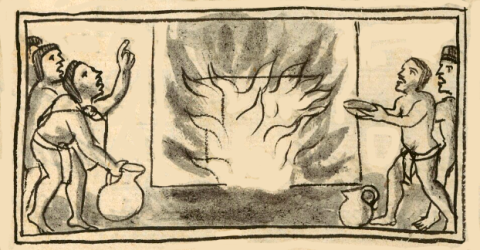
This iconographic example, featuring a black and white sketch of an incident when the temple of Huitzilopochtli burned (involving the verb tlatla), is included in this digital collection for the purpose of making comparisons with related hieroglyphs. The term selected for this example comes from the page preceding the image in the Digital Florentine Codex. There is no gloss, per se. This example shows five men, three on the left side and two on the right of the temple of Huitzilopochtli. They strive to put out the fire by using jugs and bowls of water, all to no avail. They wear only loincloths, which suggests that they are commoners. The architecture of the building that is on fire is what would probably be called a teocalli, in a frontal view, with flames coming out the entryway, practically making it impossible to see–other than the top of the lintel. Besides white flames, dark fingers of smoke emerge from the building entrance. The grounding is dark, and the entire scene is boxed.
Stephanie Wood
James Lockhart, the translator, explains in his notes that the pyramid upon which the temple sat was called “his mountain,” (itepeyoc), which is reminiscent of the term tlachihualtepetl (a [human-] made mountain), which appears in the Cholula Relación Geográfica. The verb tlatla (it burns) appears a few times in this digital collection, usually as hieroglyphs but once as another iconographic example. This fire that could not be extinguished in Huitzilopochtli’s temple is given as one of several omens that (in retrospect) were recalled as indicative that the Spanish invasion was coming.
Stephanie Wood
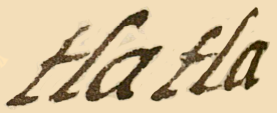
tlatla
Stephanie Wood
1577
Jeff Haskett-Wood
quemar, fuego, llamas, edificio, edificios, templo, templos, calli, tetzahuitl
tlatla, to burn, https://nahuatl.wired-humanities.org/content/tlatla
teocal(li), a temple, devotional building, https://nahuatl.wired-humanities.org/content/teocalli
abrasarse o quemarse
Stephanie Wood
Available at Digital Florentine Codex/Códice Florentino Digital, edited by Kim N. Richter and Alicia Maria Houtrouw, "Book 12: Conquest of Mexico", fol. 2r, Getty Research Institute, 2023. https://florentinecodex.getty.edu/en/book/12/folio/24/images/0 Accessed 7 February 2026.
Images of the digitized Florentine Codex are made available under the following Creative Commons license: CC BY-NC-ND (Attribution-NonCommercial-NoDerivs 4.0 International). For print-publication quality photos, please contact the Biblioteca Medicea Laurenziana ([email protected]). The Library of Congress has also published this manuscript, using the images of the World Digital Library copy. “The Library of Congress is unaware of any copyright or other restrictions in the World Digital Library Collection. Absent any such restrictions, these materials are free to use and reuse.”