tzoncalli (TK221v)
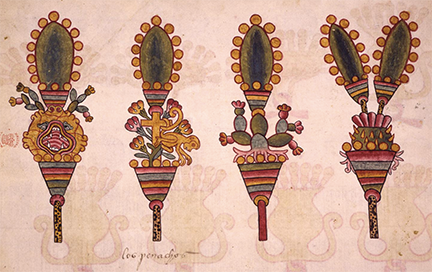
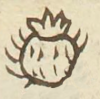
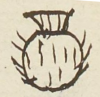
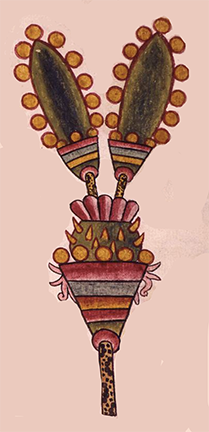
This painted example of iconography features a multicolored headdress that we are labeling a tzoncalli, based on the Spanish-language gloss, “los penachos.”) This tzoncalli features a fruit (nochtli) of the prickly pear cactus. It is round with spines, and five red petals come up out of the top of the fruit. What may be pink roots peek out from behind the lower part of the headdress. The lower part of the headdress has a horizontal row of more gold discs and then rows of horizontal stripes in blue, red, gold, and green. The discs are outlined in red. Finally, what appears to be a spotted strip of jaguar skin hangs down below the stripes. The upper part of the tzoncalli is a green oval with more than a dozen small gold discs around it.
Stephanie Wood
This is another example of tributes in kind, which the town was protesting (while paying). The prickly pear or nochtli fruit from the nopalli cactus comes in different colors, including red, purple, yellow, orange, green, and white. It starts life as a flower, and then the base of the flower becomes more bulbous and juicy. It must be peeled to be eaten. This fruit is a key element in the hieroglyph for Tenochtitlan, the capital city. The fruit also appears in other place names and personal names.
Stephanie Wood
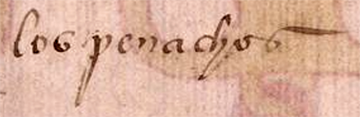
los penachos
Stephanie Wood
c. 1556
Jeff Haskett-Wood
headdresses, tocado, tocados, penachos, flores, plantas, colores, nopal, nopales, tuna, tributo, tributos, resistencia, colonialismo
tzoncal(li), a headdress (in this case), https://nahuatl.wired-humanities.org/content/tzoncalli
los penachos
Stephanie Wood
The Codex Kingsborough, also known as the Códice de Tepetlaoztoc, and the Memorial de los indios de Tepetlaoztoc, is not on display. It was transferred from the British Library and is now held by the British Museum. It is shared on line at: https://www.britishmuseum.org/collection/object/E_Am2006-Drg-13964
©The Trustees of the British Museum. Shared under a Creative Commons Attribution-Non-Commercial-ShareAlike 4.0 International (CC BY-NC-SA 4.0) license. Please also cite the <em>Visual Lexicon of Aztec Hieroglyphsem>, ed. Stephanie Wood (Eugene, Ore.: Wired Humanities Projects, 2020-present) and this URL.