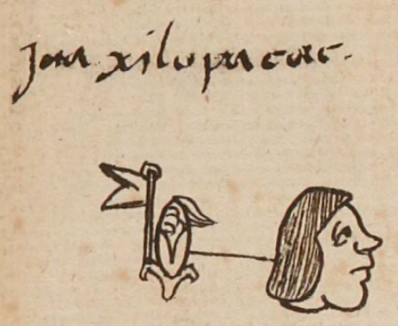
Xilopacac (Verg25r)
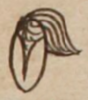
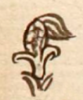
This compound Nahuatl hieroglyph is a black-line drawing of the personal name Xilopacac, attested here as a man’s name. It has two elements, the most important being a tender ear of maize (xilotl), which provides the start to the name. This ear of corn still has some of the husk on it, and the silk still also appears at the top. Above and to the left is a swallowtail flag flying to the left. The post it is on has a cap. Some of these features of the flag–which serves as a phonetic indicator for the -pa syllable–seem to show European artistic influences. The name ends with -pacac, which seems to mean “washed,” from the verb paca in the preterit tense.
Stephanie Wood
This is the first hieroglyph of the name Xilopacac to enter this database (as of February 2026). Xilotl, however, is attested in this collection.
Stephanie Wood
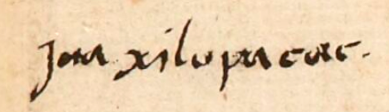
jua xilopacac.
Juan Xilopacac
Stephanie Wood
1539
Jeff Haskett-Wood
maíz, jilotes, lavar, limpiar, fonetismo, nombres de hombres, men’s names
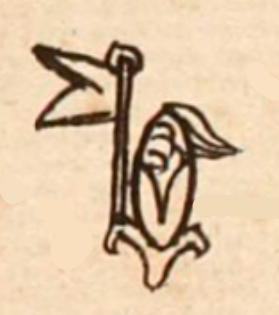
xilo(tl), a tender green ear of maize, https://nahuatl.wired-humanities.org/content/xilotl
paca, to wash, https://nahuatl.wired-humanities.org/content/paca
posiblemente, “El Jilote Lavado”
Stephanie Wood
Available at Codex Vergara, folio 25r, https://gallica.bnf.fr/ark:/12148/btv1b84528032/f57.item.zoom, accessed 22 February 2026. The Vergara is associated with Tepetlaoztoc, in the larger region of Tetzcoco, c. 1539–1543.
The non-commercial reuse of images from the Bibliothèque nationale de France is free as long as the user is in compliance with the legislation in force and provides the citation: “Source gallica.bnf.fr / Bibliothèque nationale de France” or “Source gallica.bnf.fr / BnF.” We would also appreciate a citation to the Visual Lexicon of Aztec Hieroglyphs, https://aztecglyphs.wired-humanities.org/.