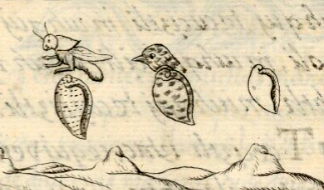
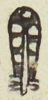
zolcilin (FCbk11f212v)
This compound hieroglyph features a type of shell (zolcilin). The term selected for this example comes from the text near the image in the Digital Florentine Codex. There is no gloss, per se. The cedilla on the C, incidentally, appears to have been added in a different ink; perhaps it was a hypercorrection. This compound glyph has two elements. One, at the top, is the head of a quail (zolin), in profile, facing left. Below the bird’s head is a vertical, turbinate shell (cilin), with the coil at the top. The shell and the quail have the same kind of spots, so perhaps the quail is a semantic indicator, a look-alike with the shell. If the text did not point directly to the quail, one might have thought of another possibility, that the quail is a phonetic indicator for the zol- of zoltic (old), suggesting that the shell looks old. The quail’s head and the shell are only barely detached; they are lined up, almost like one animal.
Stephanie Wood
This digital collection includes many hieroglyphs or elements of hieroglyphs that represent quail. Zolin was a popular man’s name. The quail is native to the Americas, and its feathers (black with white spots) are much appreciated.
Stephanie Wood
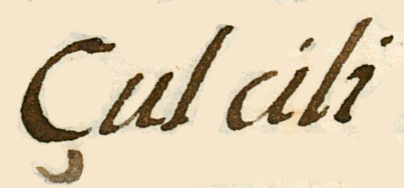
Çulcili
zolcilin
Stephanie Wood
1577
Jeff Haskett-Wood
conchas, caracol, caracoles, caracolito, caracolitos, codorniz, codornices
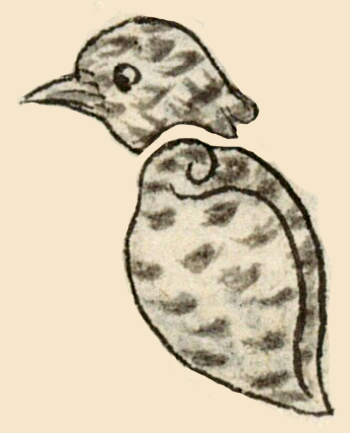
zol(in), a quail, https://nahuatl.wired-humanities.org/content/zolin
zoltic, something old, https://nahuatl.wired-humanities.org/content/zoltic
cil(in), a small turbinate shell, https://nahuatl.wired-humanities.org/content/cilin
un tipo de concha con manchas
Stephanie Wood
Available at Digital Florentine Codex/Códice Florentino Digital, edited by Kim N. Richter and Alicia Maria Houtrouw, "Book 11: Earthly Things", fol. 212v, Getty Research Institute, 2023. https://florentinecodex.getty.edu/en/book/11/folio/212v/images/0 Accessed 16 November 2025.
Images of the digitized Florentine Codex are made available under the following Creative Commons license: CC BY-NC-ND (Attribution-NonCommercial-NoDerivs 4.0 International). For print-publication quality photos, please contact the Biblioteca Medicea Laurenziana ([email protected]). The Library of Congress has also published this manuscript, using the images of the World Digital Library copy. “The Library of Congress is unaware of any copyright or other restrictions in the World Digital Library Collection. Absent any such restrictions, these materials are free to use and reuse.”