zolin (FCbk11f52v)
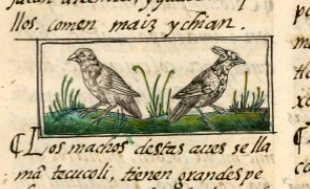
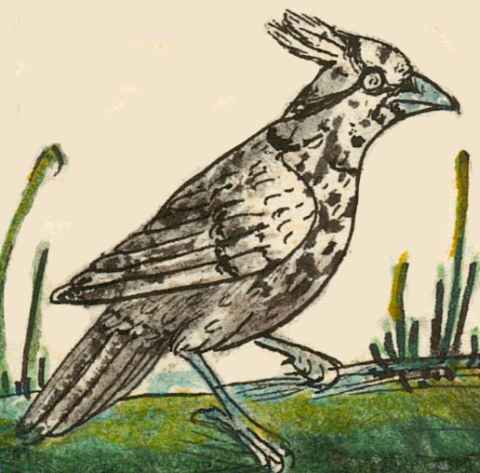
This iconographic example, featuring a quail (zolin), is included in this digital collection for the purpose of making comparisons with related hieroglyphs. The term selected for this example comes from the Nahuatl text near the image in the Digital Florentine Codex. There is no gloss, per se. This example shows a profile of a crested quail, facing the viewer’s right. Its left foot may be raised, and thus it may be walking (suggesting movement, life). Its beak appears to be painted blue. The legs are also blue. The bird stands on some grass in a landscape scene, which suggests European artistic influences.
Stephanie Wood
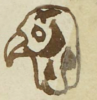
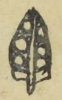
The quail captured enough attention among Nahuas that it was given as a personal name. Examples are found in the Matrícula de Huexotzinco. The Codex Mendoza shows an especially beautiful quail for the place name Zollan. The term zolin has many representations in this digital collection as simply a spotted black and white feather, suggesting that these feathers were prized. What is surprising in all the glyphs of whole quail birds is that the diagnostic crest (called a tocadillo in the Spanish text of the Digital Florentine Codex) is missing. The crest, as painted on this iconographic example, does not do it justice. Here, it looks like a pair of ears on a quadruped. The Templo Mayor museum notes that the blood or bodies of this Montezuma quail are found in religious offerings at the site.
Stephanie Wood
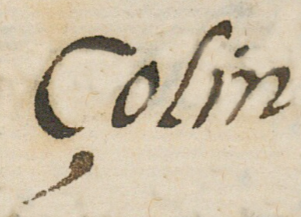
Çolin
zolin
Stephanie Wood
1577
Jeff Haskett-Wood
codornices, pintado, leonado, tocadillo, ave, aves, pájaro, pájaros, pluma, plumas, animals, animales
zol(in), the Montezuma quail, https://nahuatl.wired-humanities.org/content/zolin
el codorniz
Stephanie Wood
Available at Digital Florentine Codex/Códice Florentino Digital, edited by Kim N. Richter and Alicia Maria Houtrouw, "Book 11: Earthly Things", fol. 52v, Getty Research Institute, 2023. https://florentinecodex.getty.edu/en/book/11/folio/52v/images/0 Accessed 16 October 2025.
Images of the digitized Florentine Codex are made available under the following Creative Commons license: CC BY-NC-ND (Attribution-NonCommercial-NoDerivs 4.0 International). For print-publication quality photos, please contact the Biblioteca Medicea Laurenziana ([email protected]). The Library of Congress has also published this manuscript, using the images of the World Digital Library copy. “The Library of Congress is unaware of any copyright or other restrictions in the World Digital Library Collection. Absent any such restrictions, these materials are free to use and reuse.”