atlauhtli (Mdz10r)
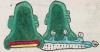
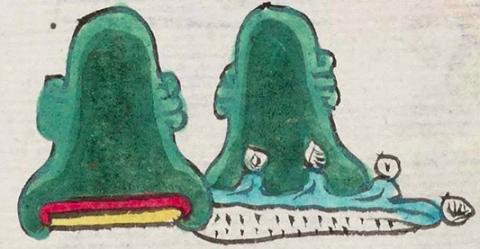
This element is contained within the compound glyph for the place name, Xalatlauhco. The presence of a ravine (atlauhtli) is the reason why two mountains are shown. There is sand at the bottom and water flows through the ravine.
Stephanie Wood
We considered carving the compound glyph to just show the area between the two mountains (tepetl), but the ravine may be easier to detect from the whole setting. The sand is not a requirement for a glyph of a ravine or gorge. The sand is present in this case because this "element" comes from the full hieroglyph for Xalatlauhco.
Stephanie Wood
c. 1541, but by 1553 at the latest
Stephanie Wood
water, shells, barrancos, agua, arena, cerros, montañas
atlauhtli, ravine, https://nahuatl.wired-humanities.org/content/atlauhtli
a(tl), water, https://nahuatl.wired-humanities.org/content/atl
el barranco
Stephanie Wood
Codex Mendoza, folio 10 recto, https://digital.bodleian.ox.ac.uk/objects/2fea788e-2aa2-4f08-b6d9-648c00..., image 30 of 188.
The Bodleian Libraries, University of Oxford, hold the original manuscript, the MS. Arch. Selden. A. 1. This image is published here under the UK Creative Commons, “Attribution-NonCommercial-ShareAlike 3.0 License” (CC-BY-NC-SA 3.0).