ichtequi (FCbk4f60v)
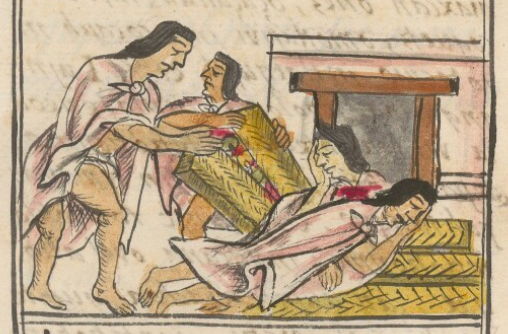
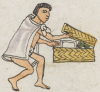
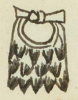
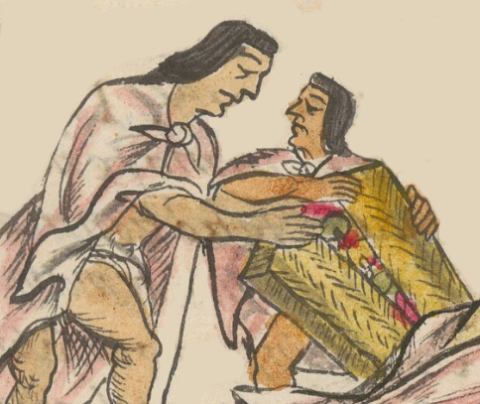
This iconographic detail from the Digital Florentine Codex (Book 4, f. 60v) shows one or two men in the act of stealing a family’s possessions. To steal is the Nahuatl verb ichtequi. Nouns for thief include ichtecqui and ichtequini. The contextualizing image here shows a man lying down holding his head and a woman over him who is apparently crying. Perhaps they are being robbed. The theft involves a large rectangular container made from woven petlatl material (apparently a petlacalli). The box-like basket is open slightly, and the contents seem to be green and yellow beads strung with something red. The two men holding the woven box wear capes and loincloths. The capes have some three-dimensionality. The keywords in the Digital Florentine Codex also describe their hair as long and loose, using the term tzonquemitl. The quemitl could could look like dreadlocks at times, such as one in the Edge of the Cedars Museum in Blanding, Utah, that was made from macaw feathers and imported from Mesoamerica in pre-contact times. But perhaps even the ones made of full-size hanging feathers could resemble long hair.
Stephanie Wood
Este extracto iconográfico del Códice Florentino Digital (libro 4, folio 60v) nos muestra a uno o dos sujetos que despojan a una familia de sus pertenencias. El verbo náhuatl ichtequi significa “robar”, mientras que ichtecqui e ichtequini son algunos de los sustantivos utilizados para referirse a un ladrón. La imagen contextual nos muestra a un hombre yacente con la cabeza sobre la mano y una mujer detrás de él que parece estar llorando: quizá los están robando. El botín del hurto es un gran contenedor rectangular hecho de petlatl tejido (probablemente un petlacalli), una cesta parecida a una caja semiabierta, con un contenido que parece ser cuentas verdes y amarillas ensartadas en algo rojo. Los dos personajes que sostienen la cesta visten taparrabos y tilmas que muestran un cierto aspecto tridimensional. Las palabras clave en el Códice Florentino Digital describen sus cabellos como largos y sueltos mediante el término tzonquemitl: en ocasiones el quemitl podía parecerse a rastas, como el ejemplar conservado en el Edge of the Cedars Museum en Blanding, Utah (EE. UU.), fabricado con plumas de guacamayo e importado de Mesoamérica en tiempos prehispánicos; pero quizá incluso los quemitl compuestos de plumas colgantes enteras podían parecerse a cabellos largos.
There is no gloss for this scene, but the team at the Digital Florentine Codex keyworded this page with ichtequi, to steal, so that is the verb we are using. They also give ichtequini, for thief. Another glyph, from the Codex Mendoza, shows a thief with a similar box-like basket of goods. Once again, in that example, the items being stolen seem to include beads, along with perhaps a piece of cloth. Cloth was a tribute item and a medium of exchange.
Stephanie Wood
No contamos con una glosa para esta escena, pero el equipo del Códice Florentino Digital asignó la palabra clave ichtequi (robar) a esta página, por lo que utilizaremos dicho verbo; también añadieron la palabra ichtequini, ladrón. Otro glifo proveniente del Códice Mendocino nos muestra a un ladrón con una cesta parecida a una caja llena de objetos, similar a la del presente ejemplo: los bienes robados parecen comprender una vez más cuentas y lo que quizá sea un trozo de tela, la cual era un artículo de tributo y un objeto de intercambio.
1577
Jeff Haskett-Wood
cuentas, tela, telas, manta, mantas, petate, petates, robar, ladrón, ladrones
ichtequi, to steal, https://nahuatl.wired-humanities.org/content/ichtequi
petlacal(li), woven hamper, https://nahuatl.wired-humanities.org/content/petlacalli
tzonquemi(tl), long loose hair, https://nahuatl.wired-humanities.org/content/tzonquemitl
robar
Stephanie Wood
Available at Digital Florentine Codex/Códice Florentino Digital, edited by Kim N. Richter and Alicia Maria Houtrouw, "Book 4: The Soothsayers", fol. 60v, Getty Research Institute, 2023. https://florentinecodex.getty.edu/en/book/4/folio/60v/images/0 Accessed 25 June 2025.
Images of the digitized Florentine Codex are made available under the following Creative Commons license: CC BY-NC-ND (Attribution-NonCommercial-NoDerivs 4.0 International). For print-publication quality photos, please contact the Biblioteca Medicea Laurenziana ([email protected]). The Library of Congress has also published this manuscript, using the images of the World Digital Library copy. “The Library of Congress is unaware of any copyright or other restrictions in the World Digital Library Collection. Absent any such restrictions, these materials are free to use and reuse.”