quechtli (FCbk11f59v)
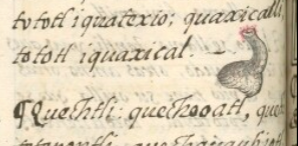
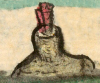
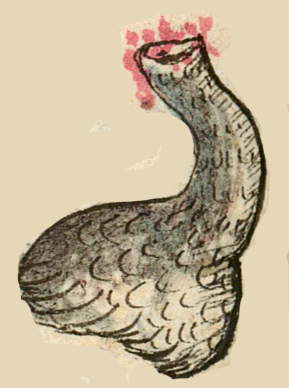
This iconographic example, featuring a neck (quechtli) of a bird, is included in this digital collection for the purpose of making comparisons with related hieroglyphs. The term selected for this example comes from the text near the image in the Digital Florentine Codex. There is no gloss, per se. This example shows the neck of a bird in which the head has been severed, leaving a bloody hole at the top. Much of the bird’s body, wings, and feet are also missing. The neck and chest are the focus.
Stephanie Wood
The contextualizing page includes two bird heads that have been severed, with blood dripping from the lower edges. The conceptualization of anatomical parts as having been cut from the whole body, whether of humans or birds, deserves further study. Comparable European anatomical parts might be those named by a butcher, such as a chicken breast, a leg of lamb, or a rump roast. It is also interesting that, while necks appear in many glyphs and iconographic examples, they are rarely singled out. See and compare the human neck, below, with this bird’s neck.
Stephanie Wood

Quechtli
quechtli
Stephanie Wood
1577
Jeff Haskett-Wood
cuellos, gargantas, pezcuezo, anatomía, pájaro, pájaros
quech(tli), throat or neck, https://nahuatl.wired-humanities.org/content/quechtli
el cuello
Stephanie Wood
Available at Digital Florentine Codex/Códice Florentino Digital, edited by Kim N. Richter and Alicia Maria Houtrouw, "Book 11: Earthly Things", fol. 59v, Getty Research Institute, 2023. https://florentinecodex.getty.edu/en/book/11/folio/59v/images/0 Accessed 16 October 2025.
Images of the digitized Florentine Codex are made available under the following Creative Commons license: CC BY-NC-ND (Attribution-NonCommercial-NoDerivs 4.0 International). For print-publication quality photos, please contact the Biblioteca Medicea Laurenziana ([email protected]). The Library of Congress has also published this manuscript, using the images of the World Digital Library copy. “The Library of Congress is unaware of any copyright or other restrictions in the World Digital Library Collection. Absent any such restrictions, these materials are free to use and reuse.”