zacatlaxcalli (FCbk11f217v)
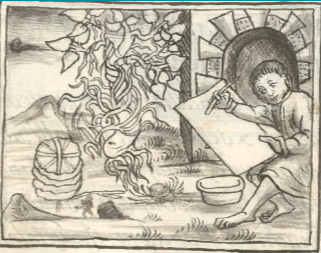
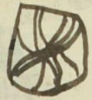
This iconographic example, featuring cakes of yellow dye material (zacatlaxcalli), is included in this digital collection for the purpose of making comparisons with related hieroglyphs. The term selected for this example comes from the text near the image in the Digital Florentine Codex. There is no gloss, per se. This example shows a stack of at least five round “cakes” of the yellow die material that has been extracted from the climbing grassy plant that appears in the contextualizing image. One of the cakes is wrapped with thin strips of something like corn husks or cord. The text refers to this substance as useful for painting, and the contextualizing image shows a man holding a writing or painting implement to a large, white, rectangular canvas or piece of paper. He is apparently poised to paint or write. The text also explains that the term for tortilla (tlaxcalli) is used because the colorant is round and flat like a tortilla. The Spanish-language text refers to a “turtilla.”
Stephanie Wood
This is the first example of zacatlaxcalli to enter this digital collection (as of January 2025), but it is a complement to other “cakes” (tlaxcalli) of pigment for use in painting or writing, such as nocheztlaxcalli. It is also instructive how one or more cakes of zacatlaxcalli are tied, something like the way a tamalli was tied in some hieroglyphs (below).
Stephanie Wood
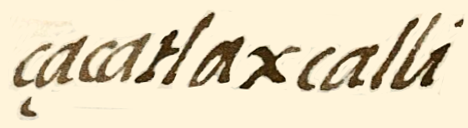
çacatlaxcalli
zacatlaxcalli
Stephanie Wood
1577
Jeff Haskett-Wood
colores, amarillo, pinturas, pintar, pasteles envueltos, atados, escribir, pintar, escribiendo, pintando, pincel, pinceles
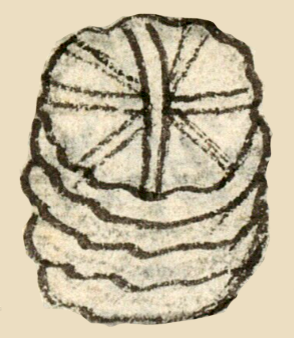
zacatlaxcal(li), a cake of yellow dye material, https://nahuatl.wired-humanities.org/content/zacatlaxcalli
un pastel de pintura amarilla
Stephanie Wood
Available at Digital Florentine Codex/Códice Florentino Digital, edited by Kim N. Richter and Alicia Maria Houtrouw, "Book 11: Earthly Things", fol. 217v, Getty Research Institute, 2023. https://florentinecodex.getty.edu/en/book/11/folio/217v/images/0 Accessed 16 November 2025.
Images of the digitized Florentine Codex are made available under the following Creative Commons license: CC BY-NC-ND (Attribution-NonCommercial-NoDerivs 4.0 International). For print-publication quality photos, please contact the Biblioteca Medicea Laurenziana ([email protected]). The Library of Congress has also published this manuscript, using the images of the World Digital Library copy. “The Library of Congress is unaware of any copyright or other restrictions in the World Digital Library Collection. Absent any such restrictions, these materials are free to use and reuse.”