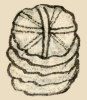
nocheztlaxcalli (FCbk11f217r)
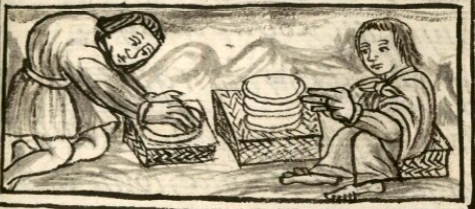
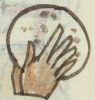
This iconographic example, featuring cochineal dye cakes (nocheztlaxcalli), is included in this digital collection for the purpose of making comparisons with related hieroglyphs. The term selected for this example comes from the text near the image in the Digital Florentine Codex. There is no gloss, per se. This example shows a stack of three cochineal tortilla-like cakes sitting on a box made from woven reeds (perhaps a petlacalli). The concentric circles give some height to each “cake.” A man’s hand is pointing to them. The contextualizing image shows two men working in this production of dye cakes, which were meant for use in textiles or paintings. The landscape setting and the way the clothing is also three-dimensional (with shading) shows European influence in the artistic style of this iconographically important scene.
Stephanie Wood
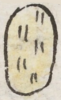
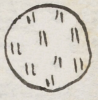
Extending the use of the term tlaxcalli (which refers to the famous tortilla corn cake) to an item that is not edible is much like the way we use “cake” in English, such as to speak of a “cake of soap,” or mahua and castor cakes, which are inedible fertilizers. In this collection so far (December 2025) we have no corn tortillas shown in a stack. The norm is a since circle, and many have double hash marks, which have an association with corn. A few tortillas are also shown as held in one hand or held between two hands. Because tortillas are shaped by the hands and eaten with the hands, the association with this body part helps clarify the meaning of the simple circle.
Stephanie Wood
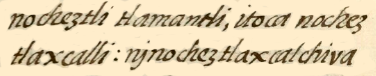
…nocheztlaxcalli…
Stephanie Wood
1577
Jeff Haskett-Wood
pasteles, tinta, tintas, rojo, insecto, insectos parásitos, mapilhuia
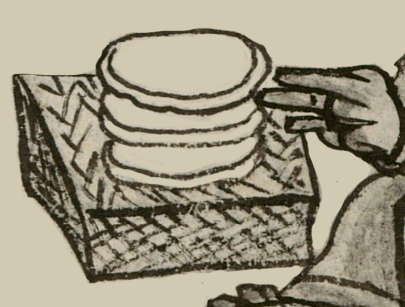
nocheztlaxcal(li), a cochineal cake, https://nahuatl.wired-humanities.org/content/nocheztlaxcalli
un pastel de cochinilla
Stephanie Wood
Available at Digital Florentine Codex/Códice Florentino Digital, edited by Kim N. Richter and Alicia Maria Houtrouw, "Book 11: Earthly Things", fol. 217r, Getty Research Institute, 2023. https://florentinecodex.getty.edu/en/book/11/folio/217r/images/0 Accessed 16 November 2025.
Images of the digitized Florentine Codex are made available under the following Creative Commons license: CC BY-NC-ND (Attribution-NonCommercial-NoDerivs 4.0 International). For print-publication quality photos, please contact the Biblioteca Medicea Laurenziana ([email protected]). The Library of Congress has also published this manuscript, using the images of the World Digital Library copy. “The Library of Congress is unaware of any copyright or other restrictions in the World Digital Library Collection. Absent any such restrictions, these materials are free to use and reuse.”