cuachtli (LTlaxUT2a)
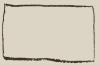
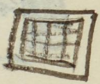
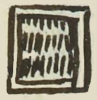
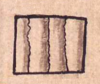
This iconographic example is included here for possible comparisons with Nahuatl hieroglyphs. It features three large rectangular pieces of cloth that we are labeling cuachtli, even though we do not have a gloss that identifies them as such. We choose this term because the cuachtli was typically a valuable cloth used for cloaks or capes and could serve as a medium of exchange or a tribute payment prior to contact. Here, the cloths are grouped with various gifts the Tlaxcalteca are offering to Hernando Cortés and his expeditionary party at the time (1519) they were making an alliance to attack Tenochtitlan together. The cuachtli would have been hand woven by Nahua woman. The designs on the cloths here are faded, but they are still colorful, and the piece in the middle has a complicated design. The outer two have horizontal stripes.
Stephanie Wood
The Spanish term for tribute cloth was typically manta. Another Nahuatl term for these rectangular fabrics is tilmatli (cloak). The ayatl was a popular cloth, but it was more of a loose weave and less refined. The paňo (a loan from Spanish found in Nahuatl) was also a valuable cloth, but it was typically made of wool, which was less common in the central highlands. See below. A Quick Search for “textiles” or “cloth” will bring up even more variety than what is mentioned here.
Stephanie Wood
1540s
Jeff Haskett-Wood
tela, telas, capa, capas, mantas, manto, mantos, tejido, tejidos, rectángulo, rectángulos, tributo, tributos
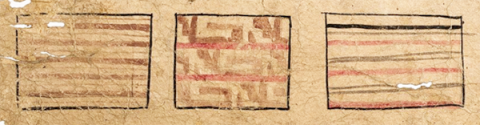
cuach(tli), a large cloth, cloak, or cape, https://nahuatl.wired-humanities.org/content/cuachtli
la manta
Stephanie Wood
Benson Latin American Collection, LLILAS Benson Latin American Studies and Collections, The University of Texas at Austin https://collections.lib.utexas.edu/catalog/utblac:3c754fd0-b27f-4af7-9cf...
The Benson Library has kindly provided the digital images and permission to put them into our Mapas Project in 2015. Use and reproduction from this project: https://creativecommons.org/publicdomain/mark/1.0/, but please also cite the Visual Lexicon of Aztec Hieroglyphs, ed. Stephanie Wood, (Eugene, Ore.: Wired Humanities Projects, ©2020-present). Version 1.0.