centzontli (Osu10v)
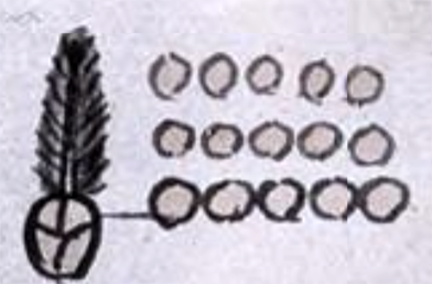
This painted simplex Nahuatl hieroglyph and notational sign features what appears to be a tree that represents 400 (centzontli). This is a detail of a much larger and more complex notation referring to a number of cacao beans that the viceroy reimbursed along with some pesos and reales (eighths of pesos, which Nahuas called tomines) for the grasses Nahua petitioners had provided to various judges of the high court of New Spain for the maintenance of their horses. This payment seems to be a response to Nahuas’ petitioning for compensation.
Stephanie Wood
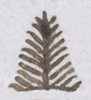
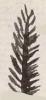
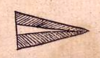
The iconography of the centzontli hieroglyph varies considerably across regions, time periods, and particular artists’ styles. See some other examples below. They will also appear as tzontli.
Stephanie Wood
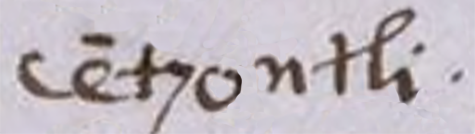
cētzontli
centzontli
Stephanie Wood
1551–1565
Jeff Haskett-Wood
número, números, árboles, plumas, pelo, hierbas, colonialismo, resistencia, protesta, compensación
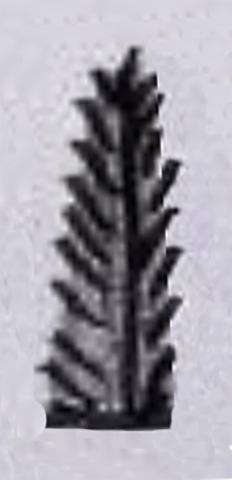
centzon(tli), four hundred, https://nahuatl.wired-humanities.org/content/centzontli
cuatrocientos
Stephanie Wood
Library of Congress Online Catalog and the World Digital Library, Osuna Codex, or Painting of the Governor, Mayors, and Rulers of Mexico, https://www.loc.gov/resource/gdcwdl.wdl_07324/. The original is located in the Biblioteca Nacional de España.
"The Library of Congress is unaware of any copyright or other restrictions in the World Digital Library Collection. Absent any such restrictions, these materials are free to use and reuse." But please cite the Biblioteca Nacional de España and this Visual Lexicon of Aztec Hieroglyphs if you use any of these images here or refer to the content on this page, providing the URL.