Chapol (MH753r)
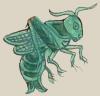
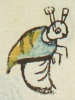
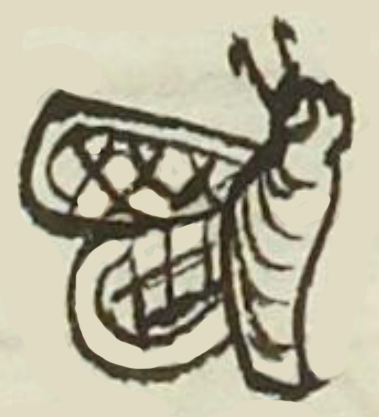
This black-line drawing of the simplex glyph for the personal name Chapol (“Grasshopper”) is attested here as a man’s name. It shows a grasshopper (chapolin) in profile, facing toward the viewer’s right. Its wings are raised, as though in motion. The wings have a mesh pattern and the body has curving lines that give it a three-dimensionality.
Stephanie Wood
This was a popular name for Nahua males in this time and place. Grasshoppers, which were prevalent in the fields, were caught and consumed as food in some areas. The iconography of the grasshoppers varies across the various writer/painters who participated in making this manuscript. But attention to detail for such a small creature is impressive. See below.
Stephanie Wood
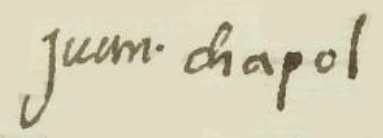
juan. chapol
Juan Chapol
1560
Jeff Haskett-Wood
chapulines, chapulín, insectos, insecto, nombres de hombres
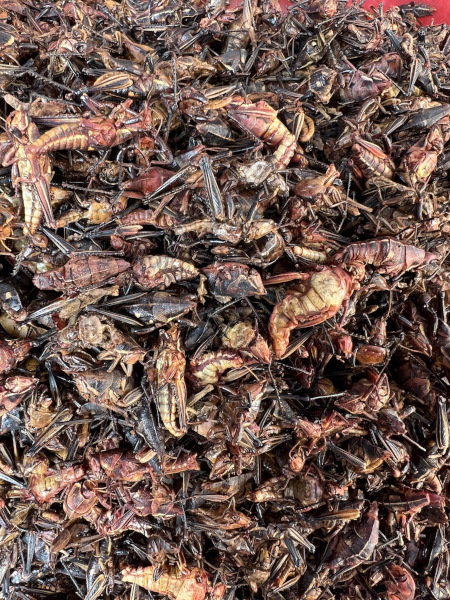
Still a notable part of the Mexican diet, these grasshoppers (chapolines, from the Nahuatl chapolin) were for sale at the Jardín Dr. Ignacio Chávez on Avenida Cuauhtemoc, Mexico City. Photograph by Stephanie Wood, 18 January 2026.
chapol(in), grasshopper, https://nahuatl.wired-humanities.org/content/chapolin
Chapulin
Stephanie Wood
Matrícula de Huexotzinco, folio 753r, World Digital Library, https://www.loc.gov/resource/gdcwdl.wdl_15282/?sp=584&st=image
This manuscript is hosted by the Library of Congress and the World Digital Library; used here with the Creative Commons, “Attribution-NonCommercial-ShareAlike 3.0 License” (CC-BY-NC-SAq 3.0).