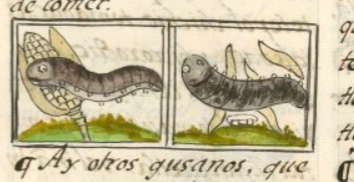
cinocuilin (FCbk11f105v)
This compound glyph, featuring a corn earworm (cinocuilin), is included in this digital collection for the purpose of making comparisons with related hieroglyphs. The term selected for this example comes from the text near the image in the Digital Florentine Codex. There is no gloss, per se. This example shows a profile view (facing left) of an undulating horizontal worm (ocuilin). Its segmented back is reddish brown, and its belly is white. It has two rows of small rounded feet on either size of its belly. Its visible eye is open. Next to this worm is an ear of corn (centli or cintli) with its husk partially removed so that the kernels show. The worm and the ear of corn are placed in a landscape setting, which shows European artistic influence. The placement of the worm slightly in front of the corn and some shading on the worm add three-dimensionality, another European stylistic. While this is not a traditional compound hieroglyph, it seems to be a late expression of that type of writing system.
Stephanie Wood
The corn provides the cin- start to the name. However, it is worth noting that the ear of corn could be called cintli or centli, as the many examples in this digital collection convey. The Nahuatl text on the same page as this image underlines that cintli and centli are both acceptable names.
Stephanie Wood
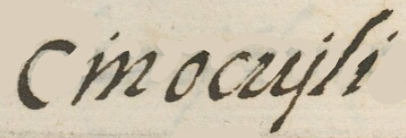
cinocuili
cinocuilin
Stephanie Wood
1577
Jeff Haskett-Wood
elote, maíz, gusanos
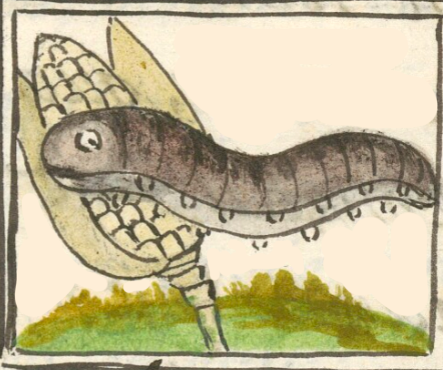
cinocuil(in), an edible corn earworm, https://nahuatl.wired-humanities.org/content/cinocuilin
el gusano elotero, o el gusano cogollero
Stephanie Wood
Available at Digital Florentine Codex/Códice Florentino Digital, edited by Kim N. Richter and Alicia Maria Houtrouw, "Book 11: Earthly Things", fol. 105v, Getty Research Institute, 2023. https://florentinecodex.getty.edu/en/book/11/folio/105v/images/0 Accessed 16 October 2025.
Images of the digitized Florentine Codex are made available under the following Creative Commons license: CC BY-NC-ND (Attribution-NonCommercial-NoDerivs 4.0 International). For print-publication quality photos, please contact the Biblioteca Medicea Laurenziana ([email protected]). The Library of Congress has also published this manuscript, using the images of the World Digital Library copy. “The Library of Congress is unaware of any copyright or other restrictions in the World Digital Library Collection. Absent any such restrictions, these materials are free to use and reuse.”