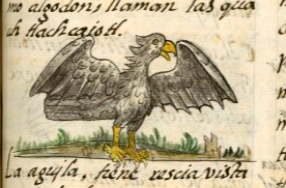
cuauhtli (FCbk11f42r)
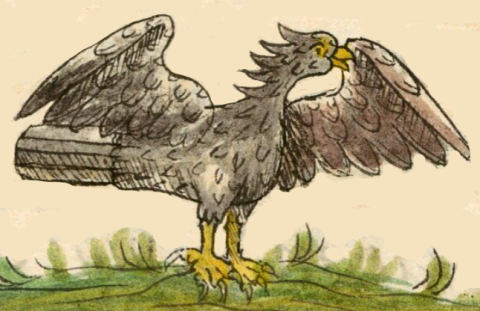
This iconographic example, featuring an eagle (cuauhtli), is included in this digital collection for the purpose of making comparisons with related hieroglyphs. The term selected for this example comes from the Nahuatl text near the image the Digital Florentine Codex. There is no gloss, per se. This example shows an eagle with its wing spread, body facing forward (frontal), but head turned to the right. Its wings are gray and brown, its eye, beak, legs and feet are yellow. It is perched on a grassy knoll. The addition of this landscape suggests European artistic influence. Hatch marks create shading that gives the bird some three-dimensionality.
Stephanie Wood
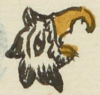
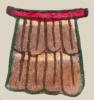
The cuauhtli is extremely prevalent in this digital collection, whether supporting a semantic significance or a phonetic role (for the stem -cuauh- in a compound glyph). The eagle on the cactus is intimately tied to the ethnic origin story of the Mexica. Cuauhtli was a day name in the 260-day religious divinatory calendar, which resulted in children having this name. Many warriors also took the label “cuauhtli.” The feathers were also precious; they were used, for instance, in the ritual bib, the cuauhquemitl, and many individuals took the name Cuauhquen, underlining its importance in the culture. In the drawings and paintings of eagles, the beak is often open, revealing the hook on the upper half of the beak. This was a reminder of its ability to rip its prey apart. In black-and-white line drawings of eagle heads, the beak is sometimes singled out and painted (yellow), bringing attention to it.
Stephanie Wood
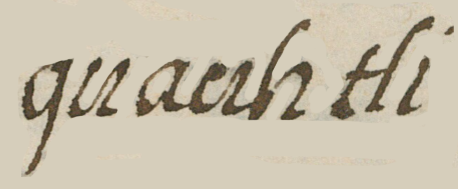
quauhtli
cuauhtli
Stephanie Wood
1577
Jeff Haskett-Wood
águilas, pico, picos, guerrero, guerreros, etnicidad, ave, aves, pájaro, pájaros, pluma, plumas, animals, animales
cuauh(tli), eagle, https://nahuatl.wired-humanities.org/content/cuauhtli
el águila
Stephanie Wood
Available at Digital Florentine Codex/Códice Florentino Digital, edited by Kim N. Richter and Alicia Maria Houtrouw, "Book 11: Earthly Things", fol. 42r, Getty Research Institute, 2023. https://florentinecodex.getty.edu/en/book/11/folio/42r/images/0 Accessed 16 October 2025.
Images of the digitized Florentine Codex are made available under the following Creative Commons license: CC BY-NC-ND (Attribution-NonCommercial-NoDerivs 4.0 International). For print-publication quality photos, please contact the Biblioteca Medicea Laurenziana ([email protected]). The Library of Congress has also published this manuscript, using the images of the World Digital Library copy. “The Library of Congress is unaware of any copyright or other restrictions in the World Digital Library Collection. Absent any such restrictions, these materials are free to use and reuse.”