Tepexocotlan (RGTyM17)
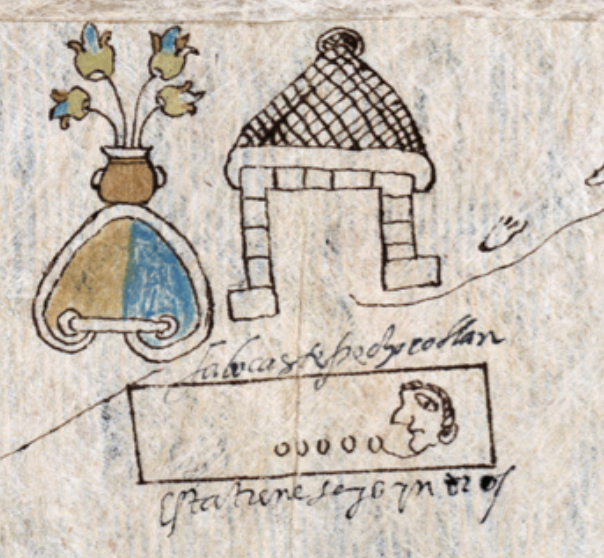
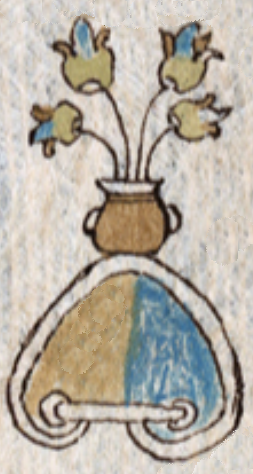
This is a colorful compound glyph for the place name Tepexocotlan, which may mean "Hill of Hog Plums." It consists of a brown and white jug (comitl), which seems to offer a phonetic support for the -co- syllable. It is apparently filled with green, brown, and blue xocotl flowers, or perhaps xocotl fruits. The tepetl (hill or mountain) upon which the jug sits could serve as a phonetic start to the place name (Tepe-). Interestingly, the hill is divided vertically in half, with the right side a sky blue and the left side brown. A white border surrounds the hill, including a horizontal line at the base.
Stephanie Wood
The phonetic "co" in the name is provided by the comitl, which is redundant if we recognize the flowers as xocotl. The reading of this compound glyph is tentative and calls for further research. The paper has a fold right where the gloss appears, making "fabrica de" and the start of the toponym uncertain.
Stephanie Wood
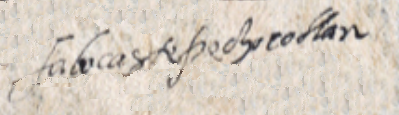
sa locas tepechocotlan
San Lucas Tepexocotlan
Stephanie Wood
1582
Jeff Haskett-Wood
plants, plantas, fruits, frutas, cerámica, cántaros, hills, cerros, mountains, montañas, nombres de lugares, pueblos, estancias, topónimos, earthenware, ceramic, ceramics, cerámicas, jug, pot, olla, jarra, jarro, vessel, vessels, vasija de cerámica, cántaro, cántaros, xoctli, xoctepi, huicolli, atlacuihuani, tecomitl, tecontontli, apilolli
tepech(tli), foundation or flooring, https://nahuatl.wired-humanities.org/content/tepechtli
xoco(tl), hog plum, https://nahuatl.wired-humanities.org/content/xocotl
com(itl), ceramic pot or jug, https://nahuatl.wired-humanities.org/content/comitl
-tlan, among, often found as a suffix on place names, https://nahuatl.wired-humanities.org/content/tlan
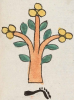
Tepechocotlan, "Place of the Fruit Hill," Barbara E. Mundy, The Mapping of New Spain (1996, 147).
Cerca del Cerro de los Jocotes
Stephanie Wood
The source of these hieroglyphs is a manuscript and map known collectively as the “Relación de Tistla y Muchitlan,” also known as the “Descripción de la Alcaldia Mayor de las Minas de Zumpango.” Apparently, these towns (today spelled Tixtla and Mochitlan) are in the modern-day state of Guerrero, but they fell under the religious jurisdiction of the Diocese of Tlaxcala. Thanks go to Octavio Márquez for his contribution of the glyph, gloss, and contextualizing images.
The original manuscript is hosted on line as part of the Benson Latin American Collection, The General Libraries, University of Texas at Austin, https://collections.lib.utexas.edu/catalog/utblac:fbc92b3e-bb28-4258-975.... It is open-access.