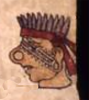
Tohueyo (MH625r)
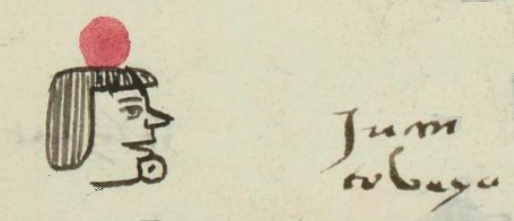
This black-line drawing of the simplex glyph for the personal name Tohueyo ("Outsider" or "Foreigner") is attested here as a man's name. This glyph is constructed as the addition of a round ornament below the lower lip of the tribute payer himself. The ornament is a circle with a dot in the middle. The implication is that this lip ornament was not worn by the local Nahuas, making this person an "outsider" (tohueyo).
Stephanie Wood
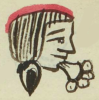
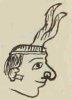
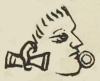
Plenty of evidence of "othering" will be found in this collection of hieroglyphs. See below for more examples of how face paint or other facial ornamentation is used to show differences between ethnicities.
The original Tohueyo was somewhat mythical or legendary as a Chichimec or Huasteco (two "others" in the perspective of the Nahuas of the central valley). Exotic and savage, he supposedly seduced the daughter of the Toltec ruler named Huemac, injecting Toltec society with chaos. But while Huemac sent Tohueyo off to war, hoping he would be killed, he apparently proved to be a valiant and successful warrior. Still, some people believed that the divine force Tezcatlipoca used the guise of Tohueyo to sow discord and distrust in Tollan (Tula). See: Alfonso Arellano, "Tula: Myth and History," Voices of Mexico (2008, 73–79).
Stephanie Wood
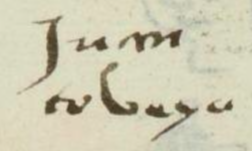
Juan
toveyo
Juan Tohueyo
Stephaie Wood
1560
Jeff Haskett-Wood
foreigners, extranjeros, ethnicities, etnicidades, nombres de hombres, othering, otherness, otredad, alteridad, men's names
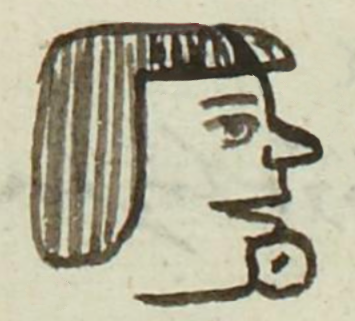
tohueyo, outsider or foreigner, https://nahuatl.wired-humanities.org/content/tohueyo
El Otro, o El Extranjero
Stephanie Wood
Matrícula de Huexotzinco, folio 625r, World Digital Library, https://www.loc.gov/resource/gdcwdl.wdl_15282/?sp=332&st=image.
This manuscript is hosted by the Library of Congress and the World Digital Library; used here with the Creative Commons, “Attribution-NonCommercial-ShareAlike 3.0 License” (CC-BY-NC-SAq 3.0).