Zacuan (Verg27r)
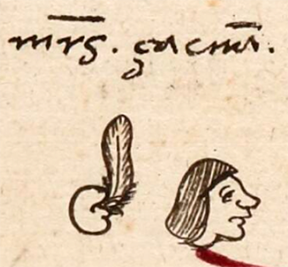
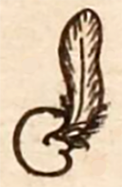
This compound Nahuatl hieroglyph is a black-line drawing of the personal name Zacuan (the name of a bird and attested here as a man’s name). It shows a vertical feather from this bird. The lower tip of the feather is going into a human mouth (or part of a face, including the chin and the mouth. This latter part is a phonetic complement to the -cua- part of the name, given that cua means “to eat.” Another example of this compound can be found on folio 28 verso.
Stephanie Wood
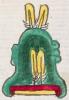
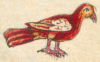
Yellow zacuan feathers appear in a compound place name in the Codex Mendoza (f. 16r) and in a personal name or title in the Matrícula de Huexotzinco (f. 711v.). The colorful red and yellow bird also appears in the Florentine Codex. Another Zacuan in the Codex Vergara appears on f. 31v. It is much like this one.
Stephanie Wood
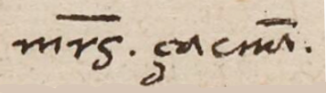
mrs. çacuā
Marcos(?) Zacuan
Stephanie Wood
1539
Jeff Haskett-Wood
pájaros, pluma, plumas amarillas, plumas rojas, comer, fonetismo, nombres de hombres, men’s names
zacuan, the Montezuma oropendula bird, https://nahuatl.wired-humanities.org/content/zacuan
el pájaro oropendula de Montezuma
Stephanie Wood
Available at Codex Vergara, folio 27r, https://gallica.bnf.fr/ark:/12148/btv1b84528032/f61.item.zoom, accessed 22 February 2026. The Vergara is associated with Tepetlaoztoc, in the larger region of Tetzcoco, c. 1539–1543.
“Source gallica.bnf.fr / BnF.” We would also appreciate a citation to the Visual Lexicon of Aztec Hieroglyphs, https://aztecglyphs.wired-humanities.org/.
Image Rights: The non-commercial reuse of images from the Bibliothèque nationale de France is free as long as the user is in compliance with the legislation in force and provides the citation: “Source gallica.bnf.fr / Bibliothèque nationale de France” or “Source gallica.bnf.fr / BnF.” We would also appreciate a citation to the Visual Lexicon of Aztec Hieroglyphs, https://aztecglyphs.wired-humanities.org/