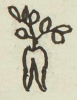
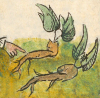
cimatl (FCbk11f128r)
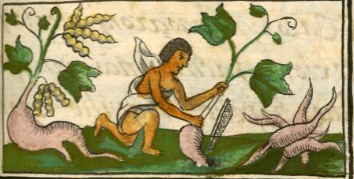
This iconographic example, featuring an edible root (cimatl), is included in this digital collection for the purpose of making comparisons with related hieroglyphs. The term selected for this example comes from the text near the image in the Digital Florentine Codex. There is no gloss, per se. This example shows a horizontal, light purple root with a nearly vertical attached branch with green leaves and two clumps of yellow seed pods. The leaves are called cuahueco. This plant is either sitting on green grass. The partial shading of the root and the use of a landscape setting shows European artistic influences. These are also apparent in the contextualizing image, which shows a Nahua man in a ¾ to profile view, facing right, wearing a cloak and a loincloth. He is involved in harvesting another cimatl, and a pile with at least four of these roots lies on the ground farther to the viewer’s right. There may be a digging stick (huictli) stuck in the ground next to the root that the man is harvesting. The nearby Nahuatl text explains that this root must be cooked in a pot so as not to make someone sick. The foliage, however, can be eaten raw, and it is the foliage that is propagated and transplanted. The DFC keywording team calls the cimatl a “runner bean.” The DFC also shows another cimatl on folio 132v, looking much the same, showing the root and the clusters of beans on the plant that is above ground.
Stephanie Wood
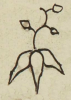
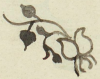
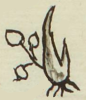
This digital collection contains a number of cimatl hieroglyphs. This is partly owing to the popularity of the man’s name, Cima. But the prevalence of leaves attached to the roots is likely indicative of the fact that both the root and the foliage are edible.
Stephanie Wood

cimatl
Stephanie Wood
1577
Jeff Haskett-Wood
tuber, tubérculo, raíz comestible, raíces, comida, una verdura con almidón
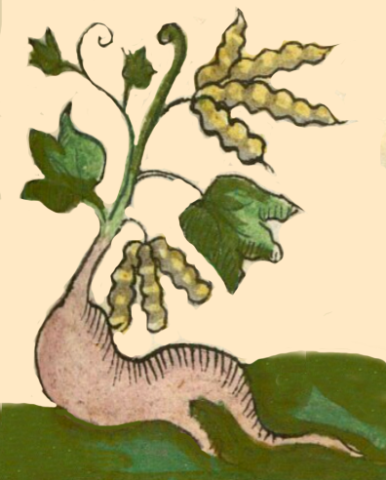
cima(tl), an edible root, https://nahuatl.wired-humanities.org/content/cimatl
el cimate
Stephanie Wood
Available at Digital Florentine Codex/Códice Florentino Digital, edited by Kim N. Richter and Alicia Maria Houtrouw, "Book 11: Earthly Things", fol. 128r, Getty Research Institute, 2023. https://florentinecodex.getty.edu/en/book/11/folio/XXX/images/0 Accessed 16 November 2025.
Images of the digitized Florentine Codex are made available under the following Creative Commons license: CC BY-NC-ND (Attribution-NonCommercial-NoDerivs 4.0 International). For print-publication quality photos, please contact the Biblioteca Medicea Laurenziana ([email protected]). The Library of Congress has also published this manuscript, using the images of the World Digital Library copy. “The Library of Congress is unaware of any copyright or other restrictions in the World Digital Library Collection. Absent any such restrictions, these materials are free to use and reuse.”