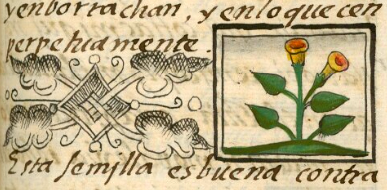
tlapatl (FCbk11f130r)
This iconographic example, featuring a flowering hallucinogenic plant (tlapatl), is included in this digital collection for the purpose of making comparisons with related hieroglyphs. The term selected for this example comes from the text near the image in the Digital Florentine Codex. There is no gloss, per se. This example gives a frontal view of a small plant with a straight stem, four pointed green leaves, and two bell-like flowers, yellow on the outside and red on the inside. The nearby Nahuatl text states that this plant has white flowers, and its fruit has stinky black seeds. If eaten, it is mind altering, it deranges one, and in some cases, permanently. It can even lead to death by curbing the appetite. It does have a medicinal value when rubbed on the skin for gout. There is an expression that one who goes about eating tlapatl is a person who belittles others. The landscape setting for this plant and the three-dimensionality of the blossoms suggest European artistic influence.
Stephanie Wood
This digital collection has one hieroglyph for tlapatl, which features simply a flower (see below). Other hallucinogenic substances can be brought up by using the Advanced Search, Cultural Content, “intoxicating drugs, hallucinogens” category.
Stephanie Wood

Tlapatl
tlapatl
Stephanie Wood
1577
Jeff Haskett-Wood
sustancias tóxicas, alucinógenas, semillas, plantas
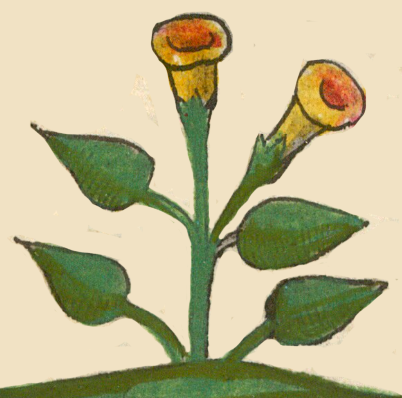
tlapa(tl), a plant with a hallucinogenic substance, https://nahuatl.wired-humanities.org/content/tlapatl
una planta alucinógena
Stephanie Wood
Available at Digital Florentine Codex/Códice Florentino Digital, edited by Kim N. Richter and Alicia Maria Houtrouw, "Book 11: Earthly Things", fol. 130r, Getty Research Institute, 2023. https://florentinecodex.getty.edu/en/book/11/folio/130r/images/0 Accessed 16 October 2025.
Images of the digitized Florentine Codex are made available under the following Creative Commons license: CC BY-NC-ND (Attribution-NonCommercial-NoDerivs 4.0 International). For print-publication quality photos, please contact the Biblioteca Medicea Laurenziana ([email protected]). The Library of Congress has also published this manuscript, using the images of the World Digital Library copy. “The Library of Congress is unaware of any copyright or other restrictions in the World Digital Library Collection. Absent any such restrictions, these materials are free to use and reuse.”