temetztlalli (FCbk11f215v)
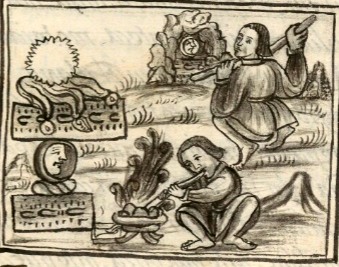
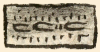
This three-element compound hieroglyph features the land (tlalli) where lead (temetztli) might be found. The term selected for this example comes from the text near the image in the Digital Florentine Codex. There is no gloss, per se. This example shows a circular, full moon (metztli) with a man’s face in profile looking left. One might expect this to be a phonetic indicator for the middle part of the term for lead, except that the text explains how lead was believed to derive from the moon (metztli). Below the moon is the element of a stone (tetl), which might provide the phonetic start to the name, but it also covers the semantic nature of the ore as being stone-like. This rock has a typical oval shape with a curving diagonal line across the middle. Finally, the rectangle with the classic features of the hieroglyph for land (tlalli), being C-shapes and dots that probably indicate cultivation (such as seeds and marks from a digging stick), involves a design that has survived from earlier times, even if tlalli glyphs might sometimes also have parceling with alternating colors. See tlalli (FCbk11f215v).
Stephanie Wood
Besides featuring the land where lead ore could be extracted, the text over several folios here suggests that tlalli is also the name for the ground up stone, much like sand (xalli). Temetztlalli is called “earth” and said to be “like sand” on folio 215 verso. See how tezcatlalli is also described in the text on folio 216 recto as “pulverized mirror stone” and “like sand.”
A three-element compound hieroglyph is fairly rare in the Florentine Codex, which makes this a valuable survivor from earlier hieroglyphic writing traditions.
Stephanie Wood
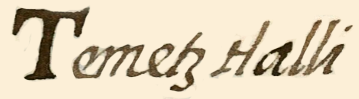
Temetz tlalli
temetztlalli
Stephanie Wood
1577
Jeff Haskett-Wood
mineral de plomo, minerales, metal, metales, lunas, piedra, piedras, pulir, lijar, limpiar
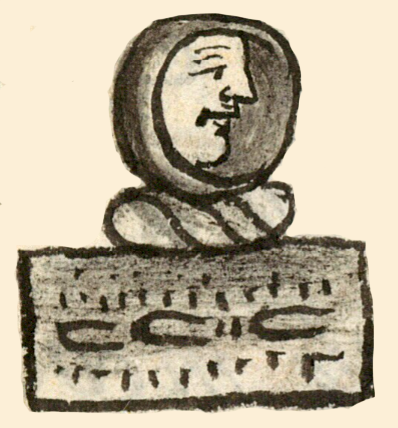
temetztlal(li), ground lead, https://nahuatl.wired-humanities.org/content/temetztlalli
temetz(tli), lead, https://nahuatl.wired-humanities.org/content/temetztli
tlal(li), land, earth, and here, powder, sand, https://nahuatl.wired-humanities.org/content/tlalli
la tierra del plomo
Stephanie Wood
Available at Digital Florentine Codex/Códice Florentino Digital, edited by Kim N. Richter and Alicia Maria Houtrouw, "Book 11: Earthly Things", fol. 215v, Getty Research Institute, 2023. https://florentinecodex.getty.edu/en/book/11/folio/215v/images/0 Accessed 16 November 2025.
Images of the digitized Florentine Codex are made available under the following Creative Commons license: CC BY-NC-ND (Attribution-NonCommercial-NoDerivs 4.0 International). For print-publication quality photos, please contact the Biblioteca Medicea Laurenziana ([email protected]). The Library of Congress has also published this manuscript, using the images of the World Digital Library copy. “The Library of Congress is unaware of any copyright or other restrictions in the World Digital Library Collection. Absent any such restrictions, these materials are free to use and reuse.”