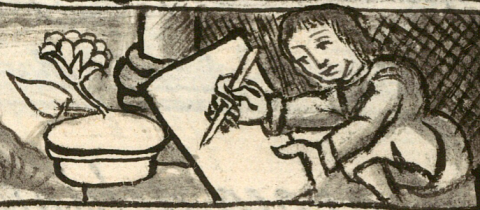
tlacuiloliztli (FCbk11f217r)
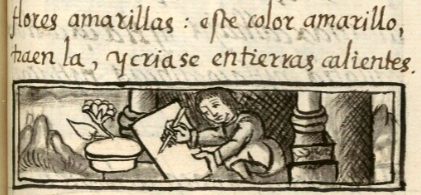
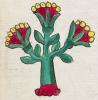
This iconographic example, featuring the act of writing or painting (tlacuiloliztli), is included in this digital collection for the purpose of making comparisons with related hieroglyphs. The term selected for this example comes from what appears in the image in the Digital Florentine Codex. There is no gloss or text that explains the illustration. This example shows a man with a large white rectangle in front of him, and he holds an implement that he is about to use to write or paint. He is shown in profile, facing left, but his face is turned toward the viewer in a ¾ view. He wears a long-sleeved, belted, probably white, cotton, tunic, in a style that suggests European influence, as does the shading on his clothing. He appears to be about to draw or paint the flower that is in the bowl near the blank paper or canvas. This flower is a xochipalli, said in the Florentine Codex to be a yellow flower, although it looks more like the xiloxochitl than any other flower in this digital collection. That flower is red and yellow.
Stephanie Wood
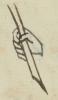
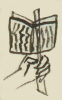
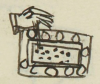
Writing and painting overlapped in Nahua thinking in the sixteenth century, although perhaps European influence was beginning to create more of a distinction, given the growing importance of the tlacuilo from the European perspective, the decline of hieroglyphic writing, and the emergence of alphabetic writing in Nahuatl. In this example of the iconography of tlacuiloliztli, it is worth noting the size and nature of the paper or canvas, as well as the size and shape of the writing or painting tool. A few writing implements appear below.
Stephanie Wood
1577
Jeff Haskett-Wood
icuiloa, pincel, pinceles, stylus, escritura, escrituras, escribiendo, pintando, tela, papel, lienzo
Stephanie Wood
Available at Digital Florentine Codex/Códice Florentino Digital, edited by Kim N. Richter and Alicia Maria Houtrouw, "Book 11: Earthly Things", fol. 217r, Getty Research Institute, 2023. https://florentinecodex.getty.edu/en/book/11/folio/217r/images/0 Accessed 16 November 2025.
Images of the digitized Florentine Codex are made available under the following Creative Commons license: CC BY-NC-ND (Attribution-NonCommercial-NoDerivs 4.0 International). For print-publication quality photos, please contact the Biblioteca Medicea Laurenziana ([email protected]). The Library of Congress has also published this manuscript, using the images of the World Digital Library copy. “The Library of Congress is unaware of any copyright or other restrictions in the World Digital Library Collection. Absent any such restrictions, these materials are free to use and reuse.”