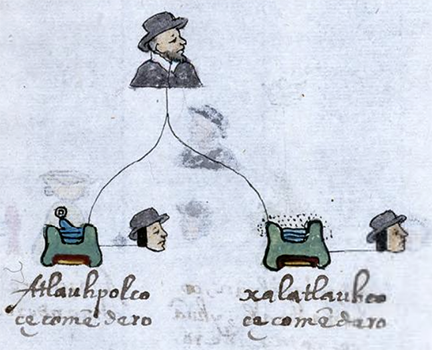
Atlauhpolco (Osu35r)
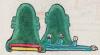
This painted compound Nahuatl hieroglyph represents the place name Atlauhpolco (perhaps, "At the Large Ravine"). It shows a mountain or hill (tepetl), a landscape feature that does not literally figure into the name, but this mountain or hill has an indentation at the top suggestive of a ravine (atlauhtli). This ravine has water in it. The water is painted a turquoise blue with three horizontal lines, flat not wavy, so probably still water. A single little stream comes up into the air above the water, and this has a droplet or bead at the tip, a classic part of the iconography for water. The red and yellow horizontal lines at the base of this hill or mountain point to the location where a natural spring could emerge as attested in a number of hieroglyphs in this collection. Also, the mountain and spring together could stand for altepetl (town, socio-political unit, or ethnic state).
Stephanie Wood
A modern version of this place name is Atlapulco. The way this ravine is drawn is similar to the hieroglyph for Atl Itlalacyan (below) in this same manuscript, which may suggest--in that case--that the place where water seeped into the ground was a ravine, too.
Stephanie Wood
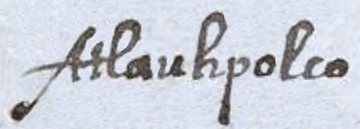
Atlauhpolco
Stephanie Wood
1551–1565
Jeff Haskett-Wood
barrancos, quebrada, quebradas, agua, nombres de lugares, topónimos, place names
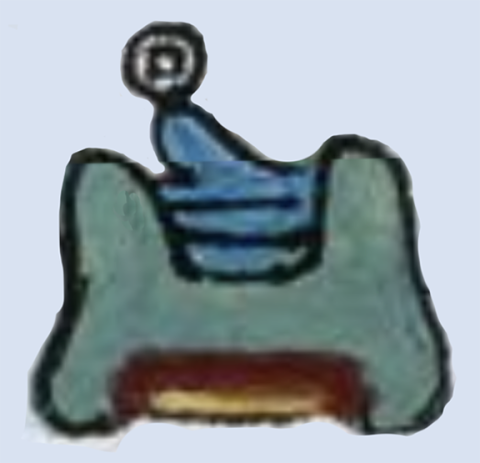
a(tl), water, https://nahuatl.wired-humanities.org/content/atl
atlauh(tli), ravine, https://nahuatl.wired-humanities.org/content/atlauhtli
-pol-, large, https://nahuatl.wired-humanities.org/content/pol
posiblemente, En el Barranco Grande
Stephanie Wood
Library of Congress Online Catalog and the World Digital Library, Osuna Codex, or Painting of the Governor, Mayors, and Rulers of Mexico, https://www.loc.gov/resource/gdcwdl.wdl_07324/. The original is located in the Biblioteca Nacional de España.
"The Library of Congress is unaware of any copyright or other restrictions in the World Digital Library Collection. Absent any such restrictions, these materials are free to use and reuse." But please cite the Biblioteca Nacional de España and this Visual Lexicon of Aztec Hieroglyphs if you use any of these images here or refer to the content on this page, providing the URL