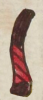
chicuacentzontli (Osu37r)
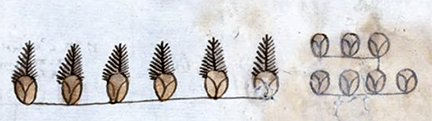
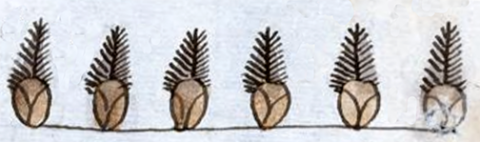
This painted Nahuatl hieroglyph represents the notation for four hundred (centzontli), written six (chicuace) times. In this case, what is being counted are cacao beans, or perhaps loads of cacao beans. This tribute item is shown as six single beans, each one with what appears to be a tree (the centzontli notation) on top. Six times 400 is 2,400. The contextualizing image shows an additional seven cacao beans.
Stephanie Wood
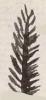
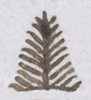
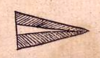
The centzontli and the tzontli signs have some interchangeability. The most typical sign is like this one, like a tree. But one will also find clumps of hair, bundles of sticks, or feathers, as shown in a few examples below.
Stephanie Wood
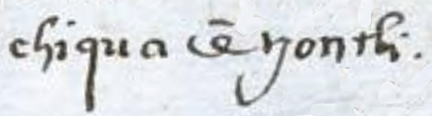
chiquacētzontli.
chicuacentzontli
Stephanie Wood
1551–1565
Jeff Haskett-Wood
números, notación, notaciónes, número, números, árbol, árboles, pelo, pelos, pluma, plumas, palo, palos, cacahuatl
chicuacen, six, https://nahuatl.wired-humanities.org/content/chicuacen
tzon(tli), 400, https://nahuatl.wired-humanities.org/content/tzontli
chicuacentzon(tli), 2,400, https://nahuatl.wired-humanities.org/content/chicuacentzontli
dos mil cuatrocientos
Stephanie Wood
Library of Congress Online Catalog and the World Digital Library, Osuna Codex, or Painting of the Governor, Mayors, and Rulers of Mexico, https://www.loc.gov/resource/gdcwdl.wdl_07324/. The original is located in the Biblioteca Nacional de España.
"The Library of Congress is unaware of any copyright or other restrictions in the World Digital Library Collection. Absent any such restrictions, these materials are free to use and reuse." But please cite the Biblioteca Nacional de España and this Visual Lexicon of Aztec Hieroglyphs if you use any of these images here or refer to the content on this page, providing the URL