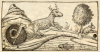
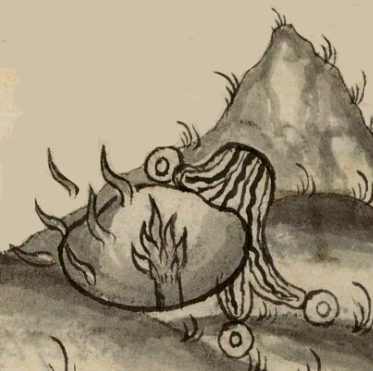
coztic apozonalli (FCbk11f207v)
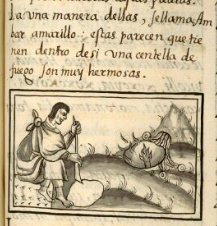
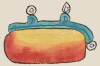
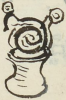
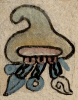
This black-line drawing of the compound Nahuatl hieroglyph for yellow liquid amber (coztic apozonalli), is included in this digital collection for the purpose of making comparisons with related hieroglyphs. The term selected for this example comes from the text near the image in the Digital Florentine Codex. There is no gloss, per se. This example shows an amber stone (apozonalli) coming from a flow of water (atl), which provides the phonetic start (a-) to the term. The water has the usual hieroglyphic elements of droplets at the tops of the streams and varying lines showing currents (movement) running through the streams. The water also comes out of a hole at the base of the nearby peak, reminiscent of some hieroglyphs of hills or mountains (tepetl) where water emerges from the red and yellow horizontal stripes at their bases (such as in the glyph for Ixicayan, Codex Mendoza 40r, or that of Colhuacan, found in its Relación Geográfica). The flames of fire in and on the stone here are semantic indicators that the stone is a type of amber, the kind that seems to have sparks flying from it and fire within it, according to the nearby text. The contextualizing image shows a man with a digging stick (huictli) and a stone he seems to have mined (given that mining of amber is discussed in the text). He wears a tilmatli (or tilmahtli) cloak, along with some European-influenced clothing with three-dimensional (shaded) fabric. The landscape setting also shows European artistic influence.
Stephanie Wood
This collection has one apozonalli hieroglyph from the Codex Mendoza. Otherwise, there are related signs, such as the iconographic example of the verb pozonaltia from the Florentine Codex and two hieroglyphs from the Matrícula de Huexotzinco, all of which are more in line with the imagery for foamy water (see below) and only about amber if they are phonetic indicators.
Stephanie Wood
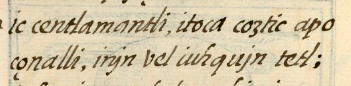
coztic apoçonalli
coztic apozonalli
Stephanie Wood
1577
Jeff Haskett-Wood
piedra, piedras, joya, joyas, fuego, llamas, moscas, agua, movement, gem, gems
apozonal(li), amber or foamy water, https://nahuatl.wired-humanities.org/content/apozonalli
coztic, yellow, https://nahuatl.wired-humanities.org/content/coztic
el ámbar amarillo
Stephanie Wood
Available at Digital Florentine Codex/Códice Florentino Digital, edited by Kim N. Richter and Alicia Maria Houtrouw, "Book 11: Earthly Things", fol. 207v, Getty Research Institute, 2023. https://florentinecodex.getty.edu/en/book/11/folio/207v/images/0 Accessed 16 November 2025.
Images of the digitized Florentine Codex are made available under the following Creative Commons license: CC BY-NC-ND (Attribution-NonCommercial-NoDerivs 4.0 International). For print-publication quality photos, please contact the Biblioteca Medicea Laurenziana ([email protected]). The Library of Congress has also published this manuscript, using the images of the World Digital Library copy. “The Library of Congress is unaware of any copyright or other restrictions in the World Digital Library Collection. Absent any such restrictions, these materials are free to use and reuse.”