inpilhuantzitzin (Osu7v)
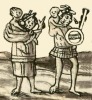
This painting of two small sons (referred to in the Nahuatl text as ipilhuantzitzin, in the possessive plural form of pilli, child) is included here as an iconographic example meant to provide for comparisons with glyphs relating to children. It comes from the Codex Osuna, folio 7 verso (or Image 17). This detail shows two small boys in profile, facing toward the viewer’s right. They are both sitting with their knees drawn up under their capes, which is a posture that men might also take. Their capes are white with a red border, and the capes are tied at the shoulder. Wearing capes suggests some degree of social status.
Stephanie Wood
The visual reduplication of the children is not significant in this iconographic example as a feature of the writing system, because this scene actually intends to represent two sons of the couple who also appear in the scene. But, the -huan- and -tzitzin- elements of the gloss do point to the plural number of children in this family.

1551–1565
Jeff Haskett-Wood
pilli, niños, hijos, bebés, criaturas, familia, descendencia

pil(li), a child or a noble, https://nahuatl.wired-humanities.org/content/pilli
cone(tl), child, https://nahuatl.wired-humanities.org/content/conetl
niño
Stephanie Wood
Library of Congress Online Catalog and the World Digital Library, Osuna Codex, or Painting of the Governor, Mayors, and Rulers of Mexico (Pintura del Gobernador, Alcaldes y Regidores de México), https://www.loc.gov/resource/gdcwdl.wdl_07324/. The original is located in the Biblioteca Nacional de España.
"The Library of Congress is unaware of any copyright or other restrictions in the World Digital Library Collection. Absent any such restrictions, these materials are free to use and reuse." But please cite the Biblioteca Nacional de España and this Visual Lexicon of Aztec Hieroglyphs if you use any of these images here or refer to the content on this page, providing the URL.