Itzcuin (BMapL79)
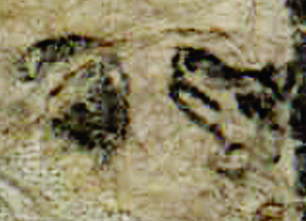
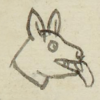
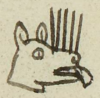
This black-line drawing of the simplex Nahuatl hieroglyph for the personal name Itzcuin (short for itzcuintli, “Dog”) shows the head of a dog in profile, looking left. The contextualizing image shows that the dog is looking toward the head of the man whose name this is. Itzcuintli is a day name from the 260-day religious divinatory calendar (tonalpohualli). Such a day name would have had a companion number from 1 to 13. Perhaps that part of the tradition was fading away, or perhaps there was an effort to disguise the continuing use of the sacred calendar by dropping the numbers. The colonial clergy were trying to suppress the use of the ancestral calendar.
Stephanie Wood
Este dibujo de trazos negros del jeroglífico simple náhuatl para el nombre propio Itzcuin (la abreviación de itzcuintli, “perro”) nos muestra la cabeza de un can de perfil que mira hacia la izquierda. La imagen contextual indica que el perro mira hacia la cabeza del hombre que porta el nombre. Itzcuintli era el nombre de un día del calendario religioso-adivinatorio de 260 días llamado tonalpohualli y se habría combinado con un número del 1 al 13. Quizá esta parte de la tradición ya estaba perdiéndose o quizá se buscaba ocultar la supervivencia del calendario sacro al omitir los números: recuérdese que el clero novohispano buscaba suprimir el uso de los calendarios ancestrales.
This glyph is not glossed; the decipherment of the glyph comes from Gordon Whittaker’s contribution to the study by Mary E. Miller and Barbara E. Mundy (2012).
c. 1565
Jeff Haskett-Wood
perros, calendarios, tonalpohualli, nombres de días, nombres de hombres
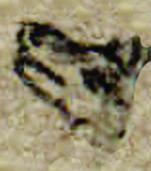
itzcuin(tli), dog, https://nahuatl.wired-humanities.org/content/itzcuintli
Perro
Stephanie Wood
Beinecke Map/Codex Reese, section 8, no. 79 in the Whittaker study (published in the Miller/Mundy book, 2012), and see the original at: https://brbl-dl.library.yale.edu/vufind/Record/3600017
The Bodleian Libraries, University of Oxford, hold the original manuscript, the MS. Arch. Selden. A. 1. This image is published here under the UK Creative Commons, “Attribution-NonCommercial-ShareAlike 3.0 License” (CC-BY-NC-SA 3.0).