Itzcuin (Verg22r)
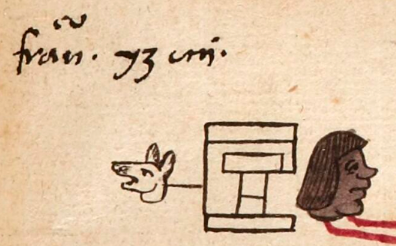
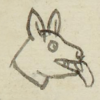
This simplex Nahuatl hieroglyph is a personal name, attested here as pertaining to a man. It is a black-line drawing of the head of an itzcuintli dog, facing left. Its mouth is open.
Stephanie Wood
Este jeroglífico simple náhuatl se utiliza para designar un nombre propio y se registra aquí como el nombre de un hombre. Se trata de un dibujo de trazos negros de la cabeza de un perro itzcuintli que mira hacia la izquierda con la boca abierta.
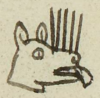
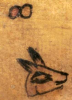
Itzcuin (short for itzcuintli) is a day name in the tonalpohualli 260-day calendar. It is popular in the Matrícula de Huexotzinco, where it is also apocopated, dropping the final absolutive ending. In some hieroglyphs the itzcuintli’s teeth are showing, and sometimes its tongue protrudes. Because calendrical names originally also carried a companion number, names such as Ce Itzcuin can be found (below). But the number component of the name seems to have dropped away in this case. This may represent an effort to disguise the continued use of the ancient calendar. Serious events in Tetzcoco in 1539 may have made Nahua tlacuilos more cautious when writing and painting about aspects of their faith. See Patricia Lopes Don for information about the Inquisition case against don Carlos Ometochtli, a Chichimecatecuhtli (or Chichimecateuctli) executed in late 1539, in Bonfires of Culture, 2010. Bradley Benton (The Lords of Tetzcoco, 2017, 46) also writes that the case “demonstrates that blatant disregard for Christianity had serious consequences.”
Stephanie Wood
Itzcuin (la abreviatura de itzcuintli) es el nombre de un día en el tonalpohualli, el calendario de 260 días, y aparece muchas veces en la Matrícula de Huexotzinco, en la que también se apocopa y pierde la terminación absolutiva final. Los dientes del itzcuintli y su lengua colgante aparecen ocasionalmente en otros jeroglíficos. Debido a que en sus inicios los nombres calendáricos incluían un número acompañante, podemos encontrar nombres tales como Ce Itzcuin (véase más abajo), pero el componente numérico del nombre parece haberse perdido en este caso, lo que podría representar un intento de disfrazar la pervivencia del uso del antiguo calendario. Los graves sucesos de 1539 en Tetzcoco podrían haber empujado a los tlacuilos nahuas a ser más cautos al escribir y pintar sobre ciertos aspectos de su religión: véase Patricia Lopes Don (Bonfires of Culture, 2010) para obtener más información sobre el proceso incoado por la Inquisición contra don Carlos Ometochtli, un chichimecateuctli ejecutado a finales de 1539. Bradley Benton (The Lords of Tetzcoco, 2017: 46) nos recuerda que este proceso “demuestra que ignorar descaradamente la doctrina cristiana tenía consecuencias muy serias”.
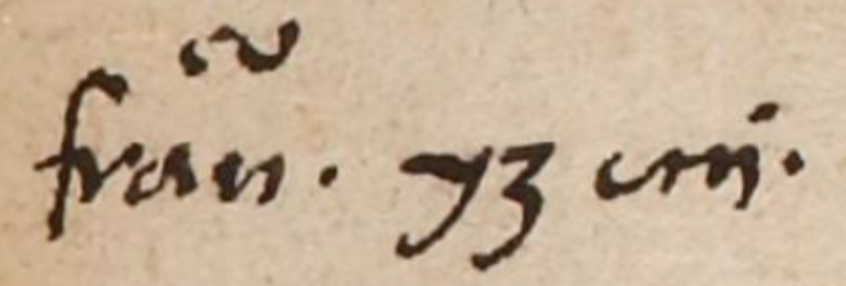
franco yzcui.
Francisco Itzcuin
Stephanie Wood
1539
Jeff Haskett-Wood
calendarios, nombres de hombres, número, números, notation, notación, perro, perros, nombres de hombres, men’s names
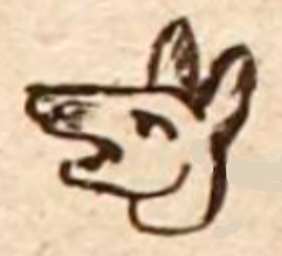
itzcuin(tli), a Mexican dog, https://nahuatl.wired-humanities.org/content/itzcuintli
Itzcuintle
Stephanie Wood
Available at Codex Vergara, folio 22r, https://gallica.bnf.fr/ark:/12148/btv1b84528032/f51.item.zoom, accessed 21 February 2026. The Vergara is associated with Tepetlaoztoc, in the larger region of Tetzcoco, c. 1539–1543.
The non-commercial reuse of images from the Bibliothèque nationale de France is free as long as the user is in compliance with the legislation in force and provides the citation: “Source gallica.bnf.fr / Bibliothèque nationale de France” or “Source gallica.bnf.fr / BnF.” We would also appreciate a citation to the Visual Lexicon of Aztec Hieroglyphs, https://aztecglyphs.wired-humanities.org/.